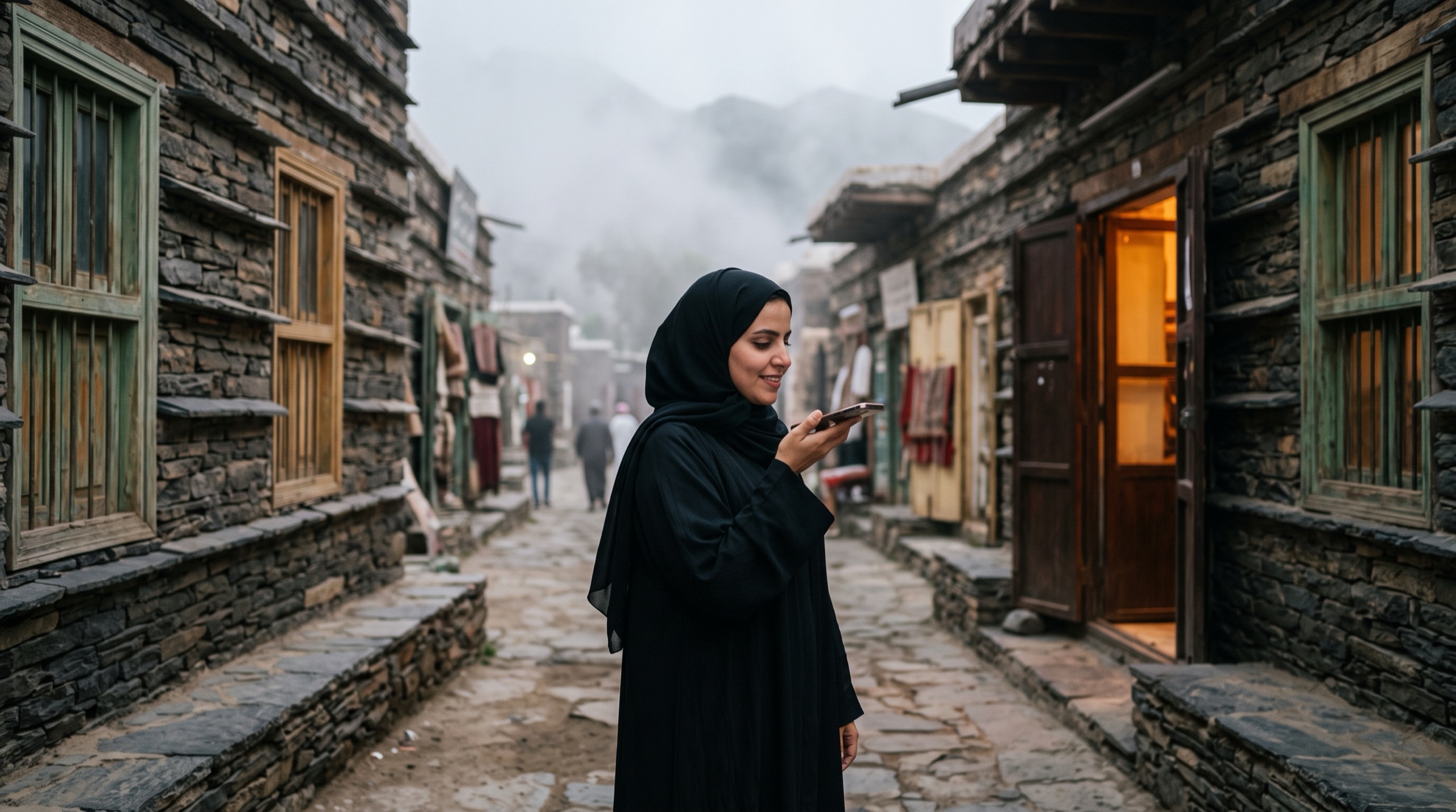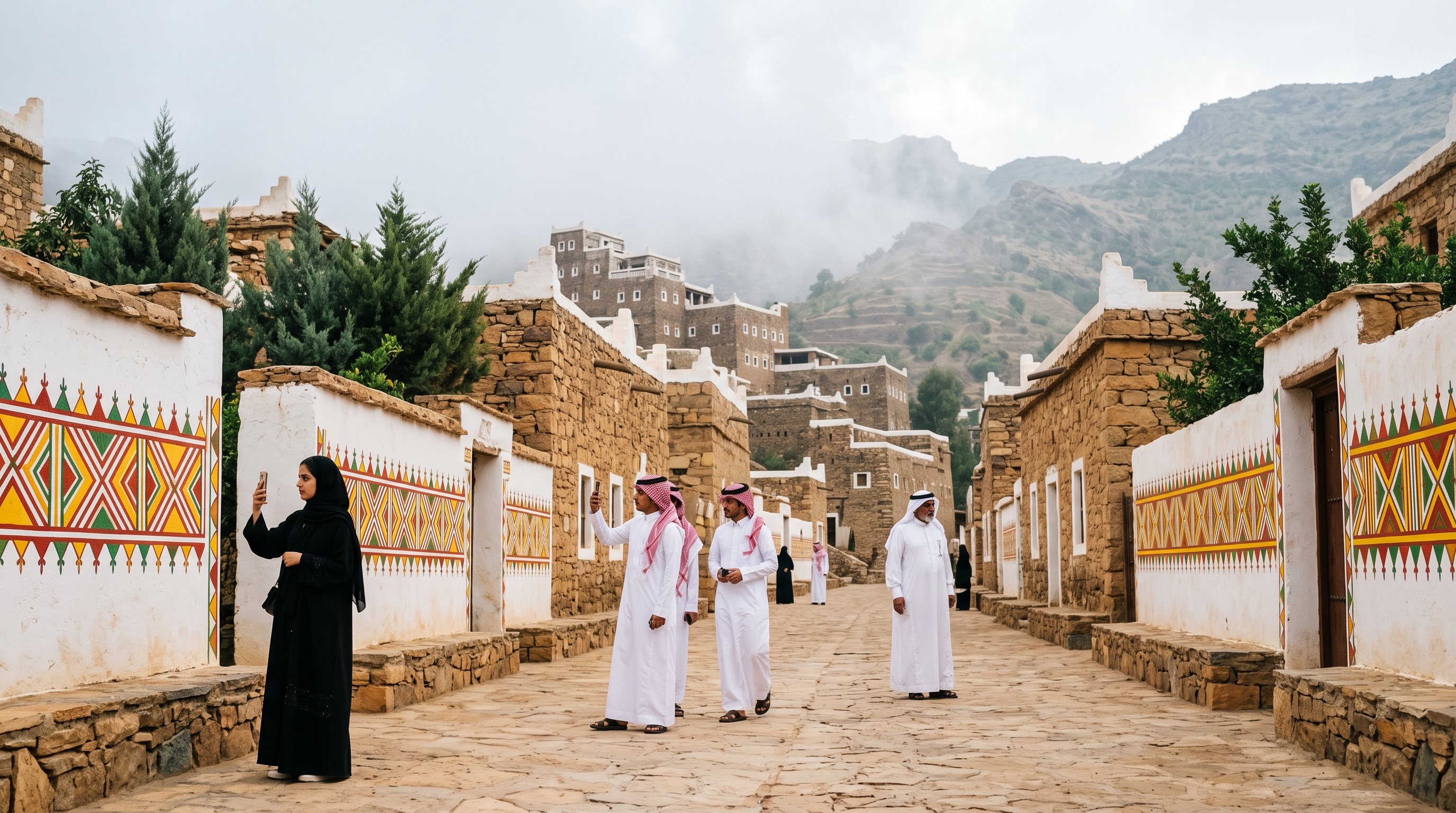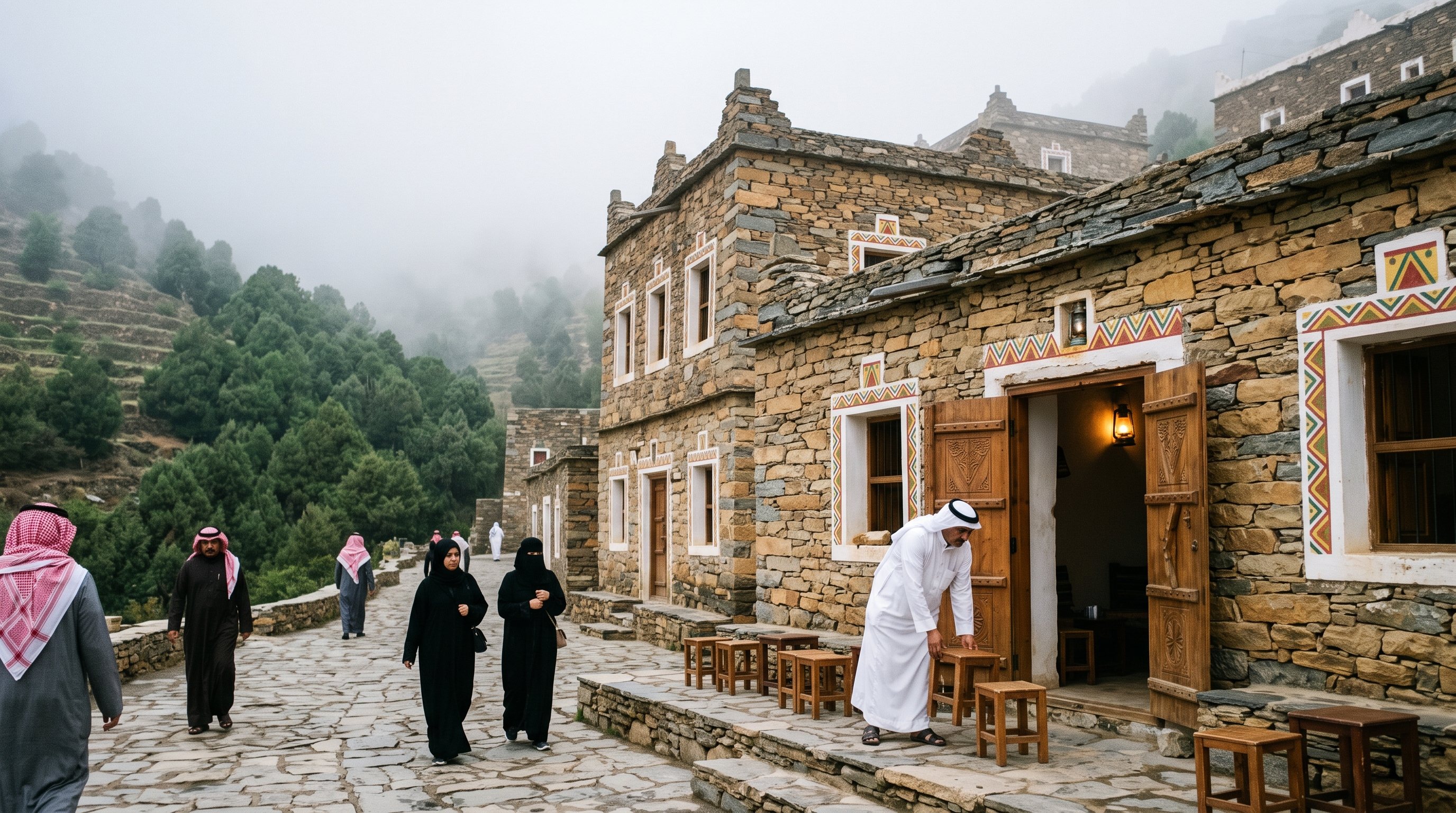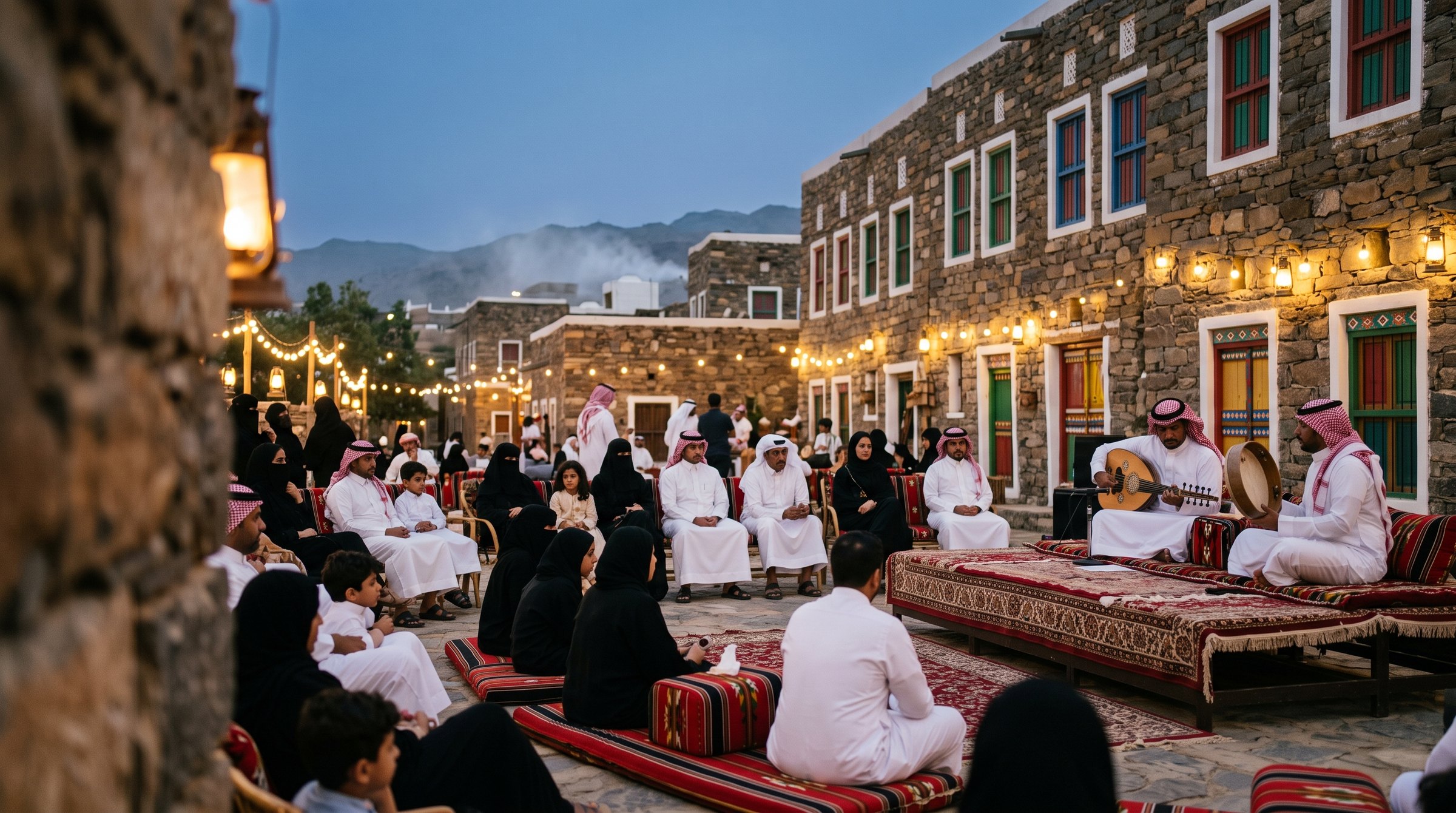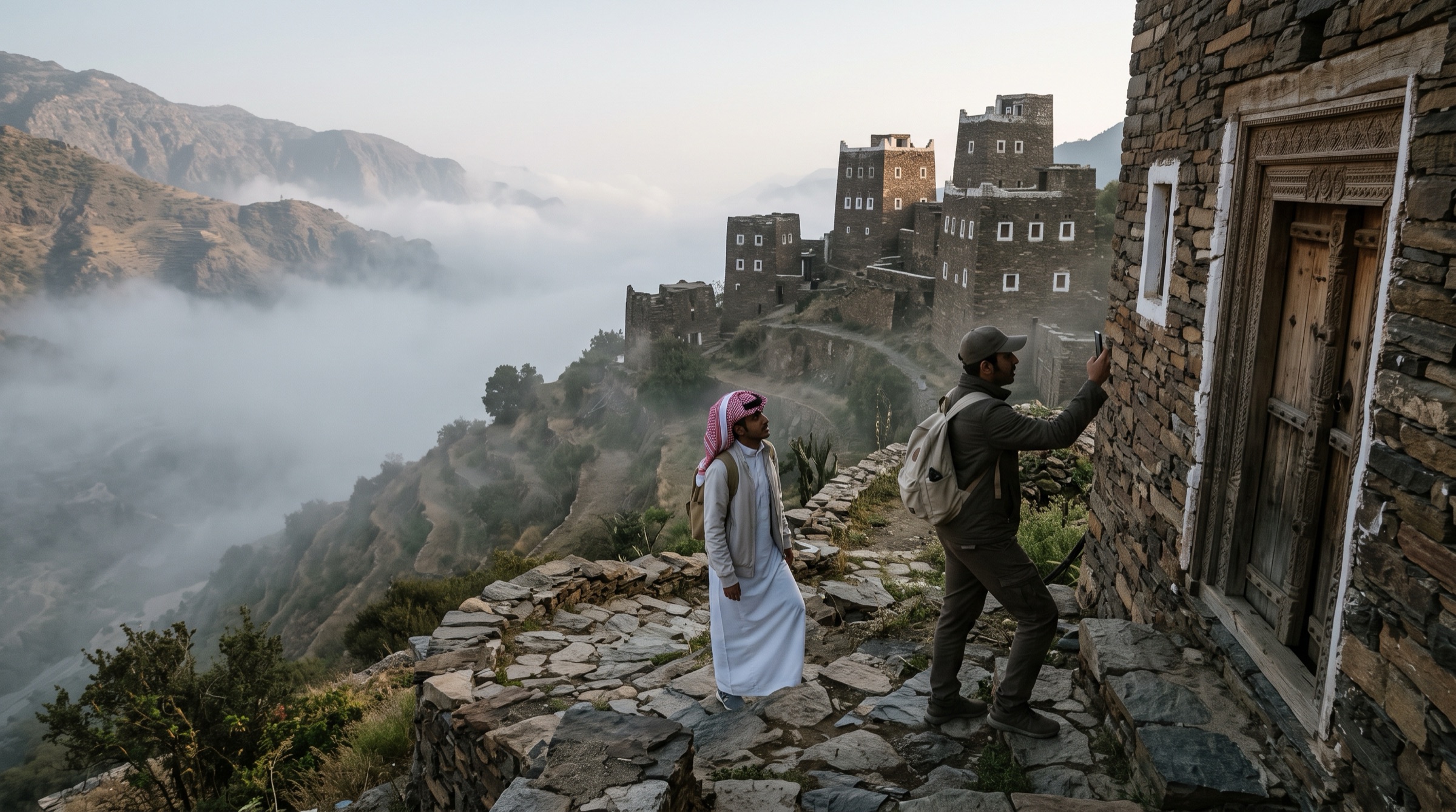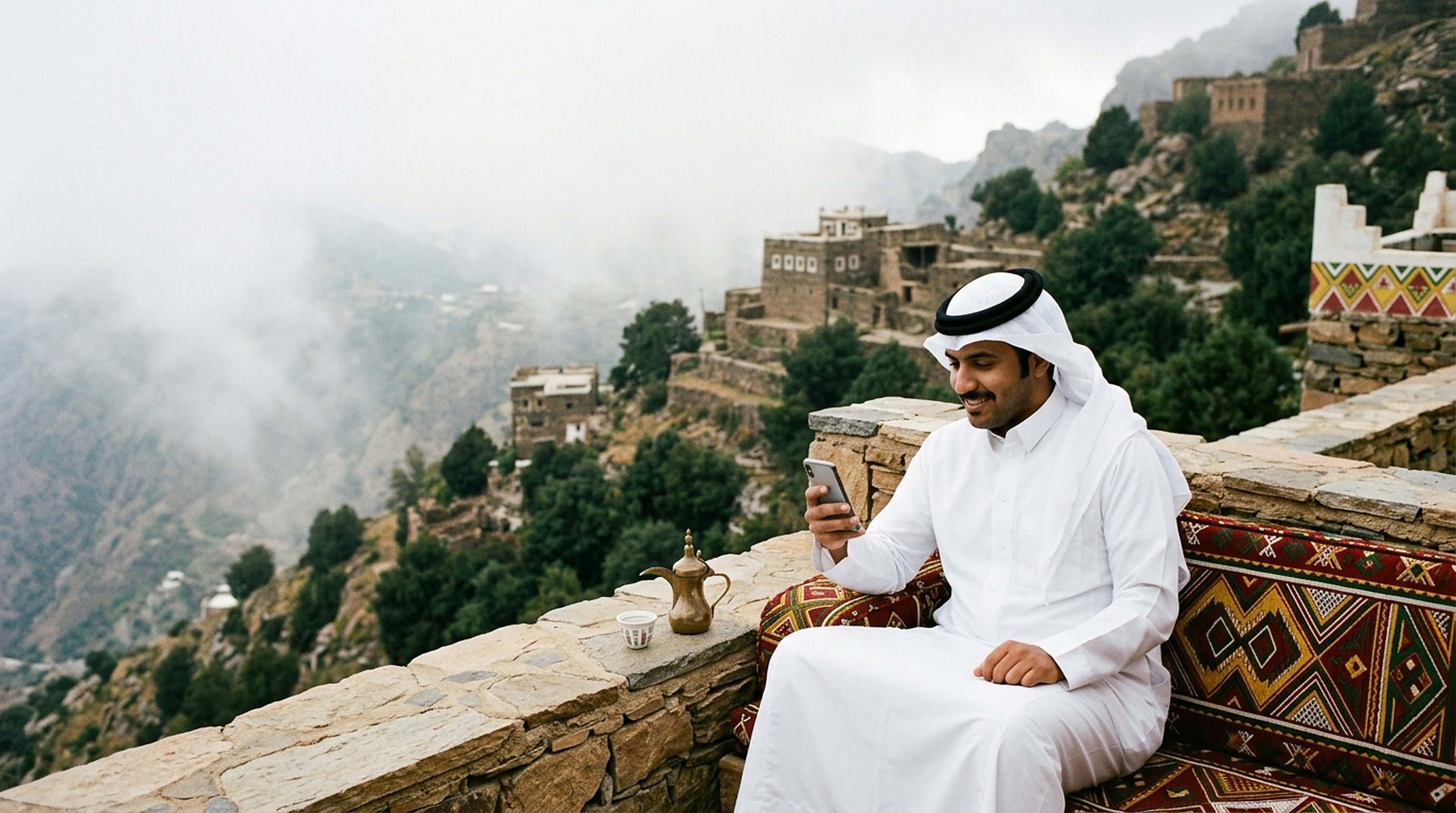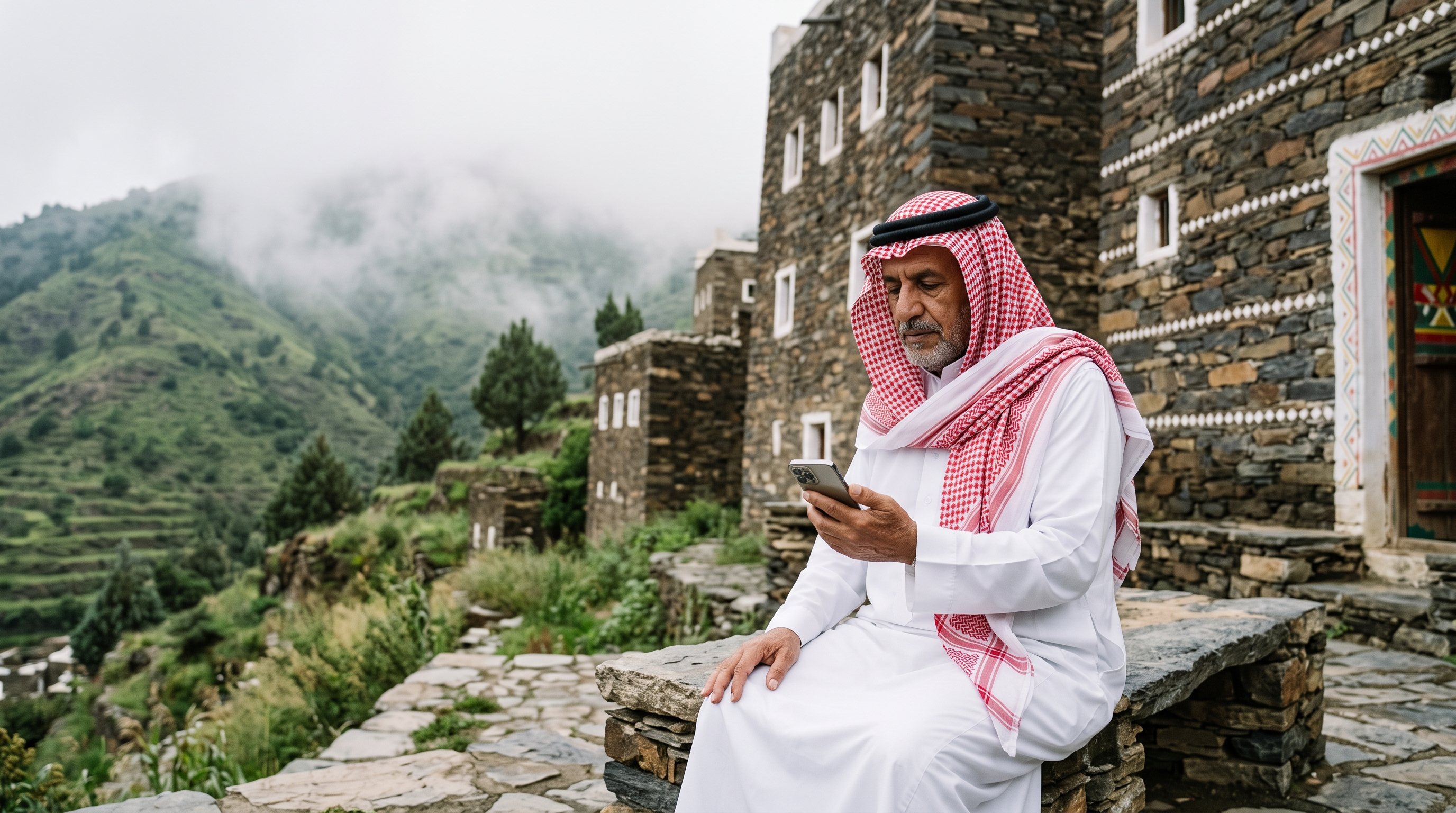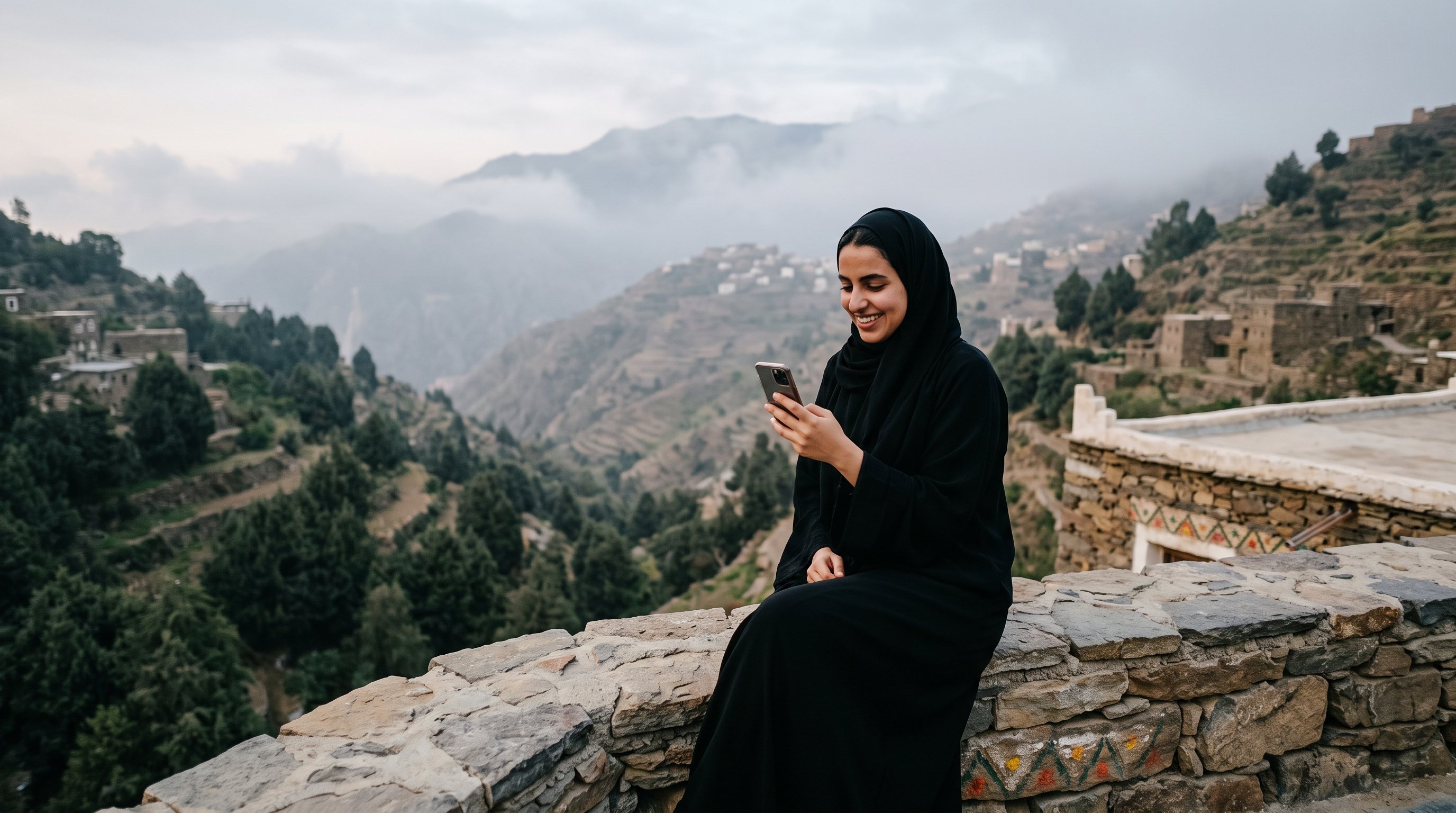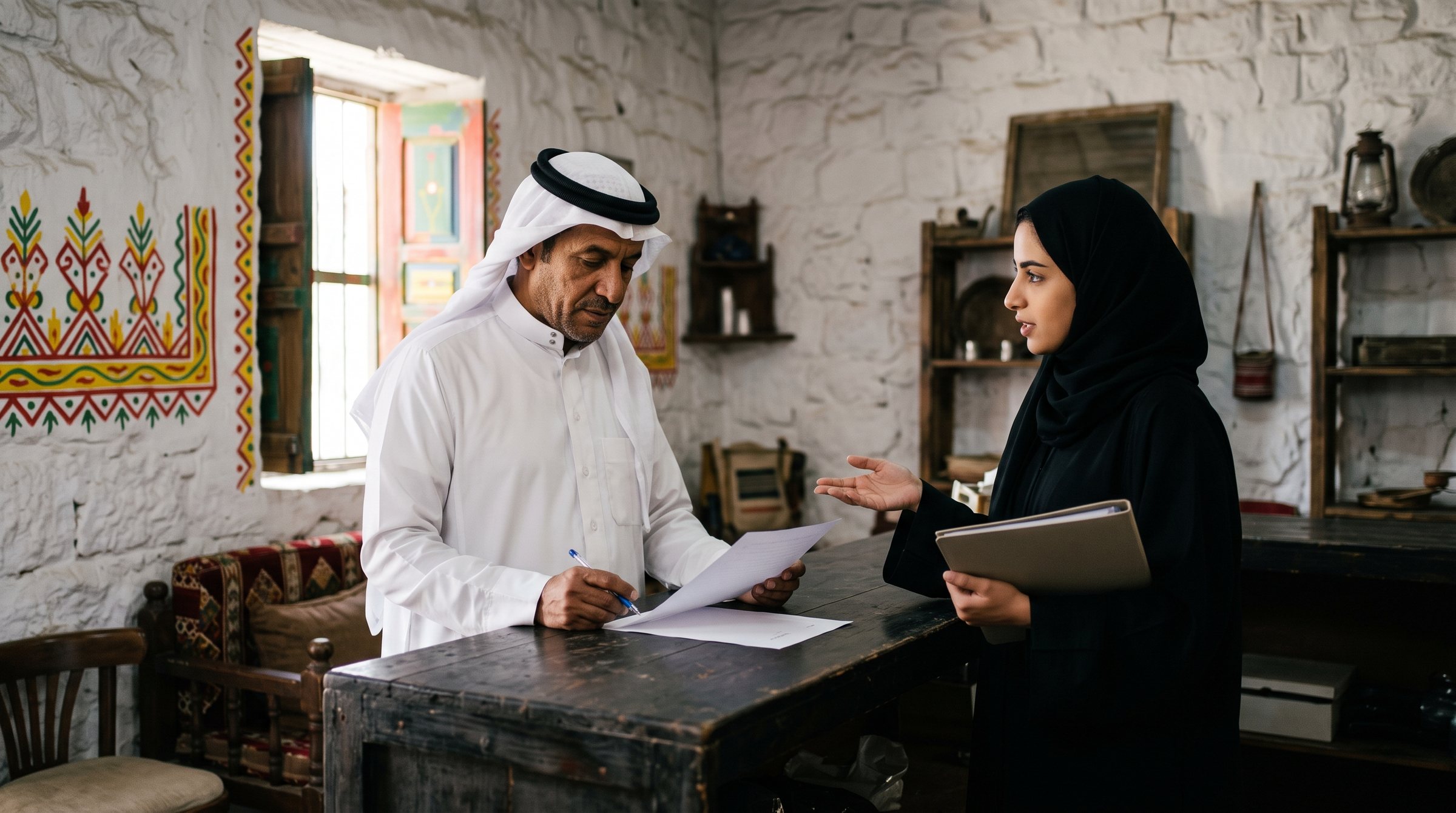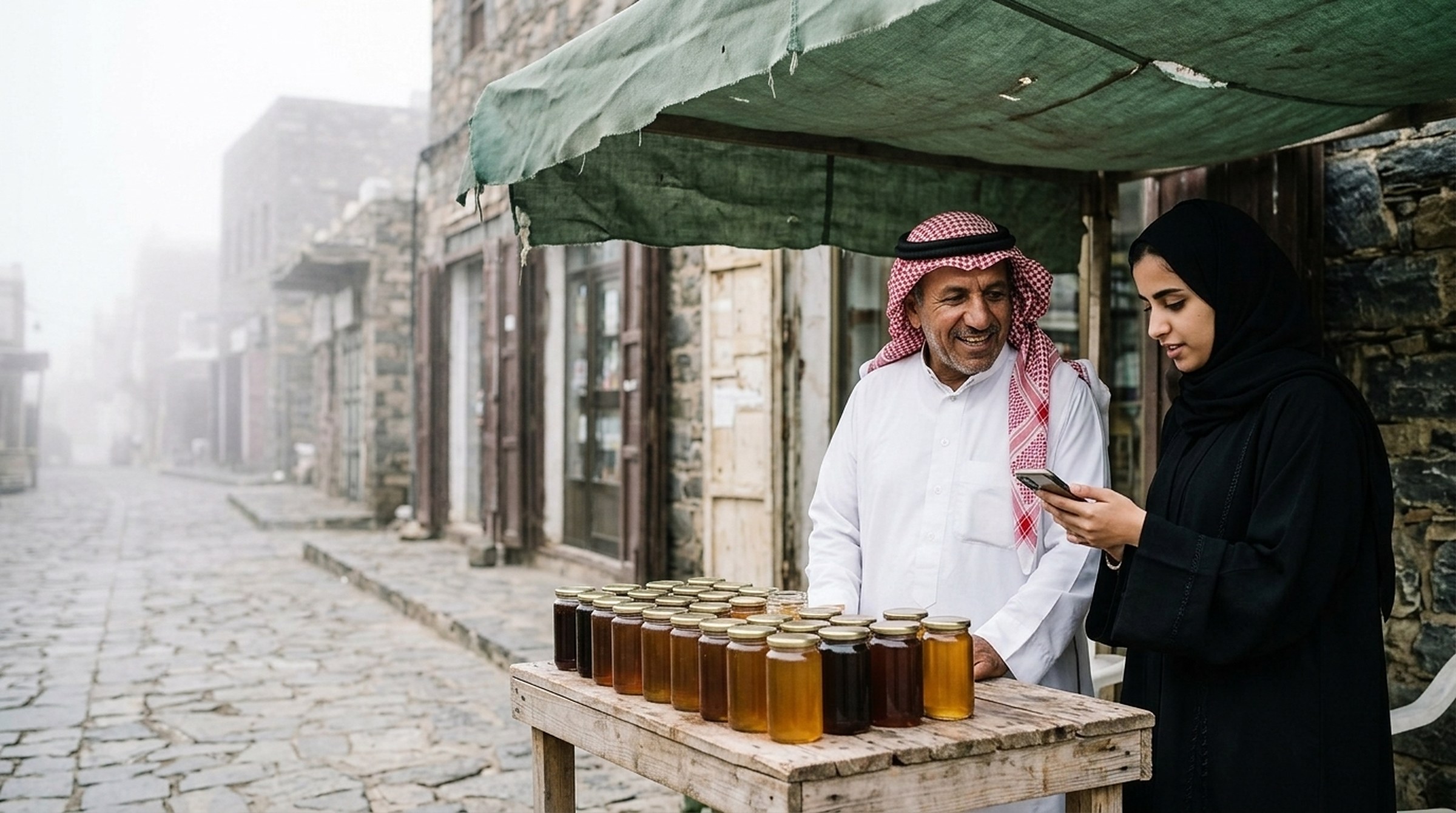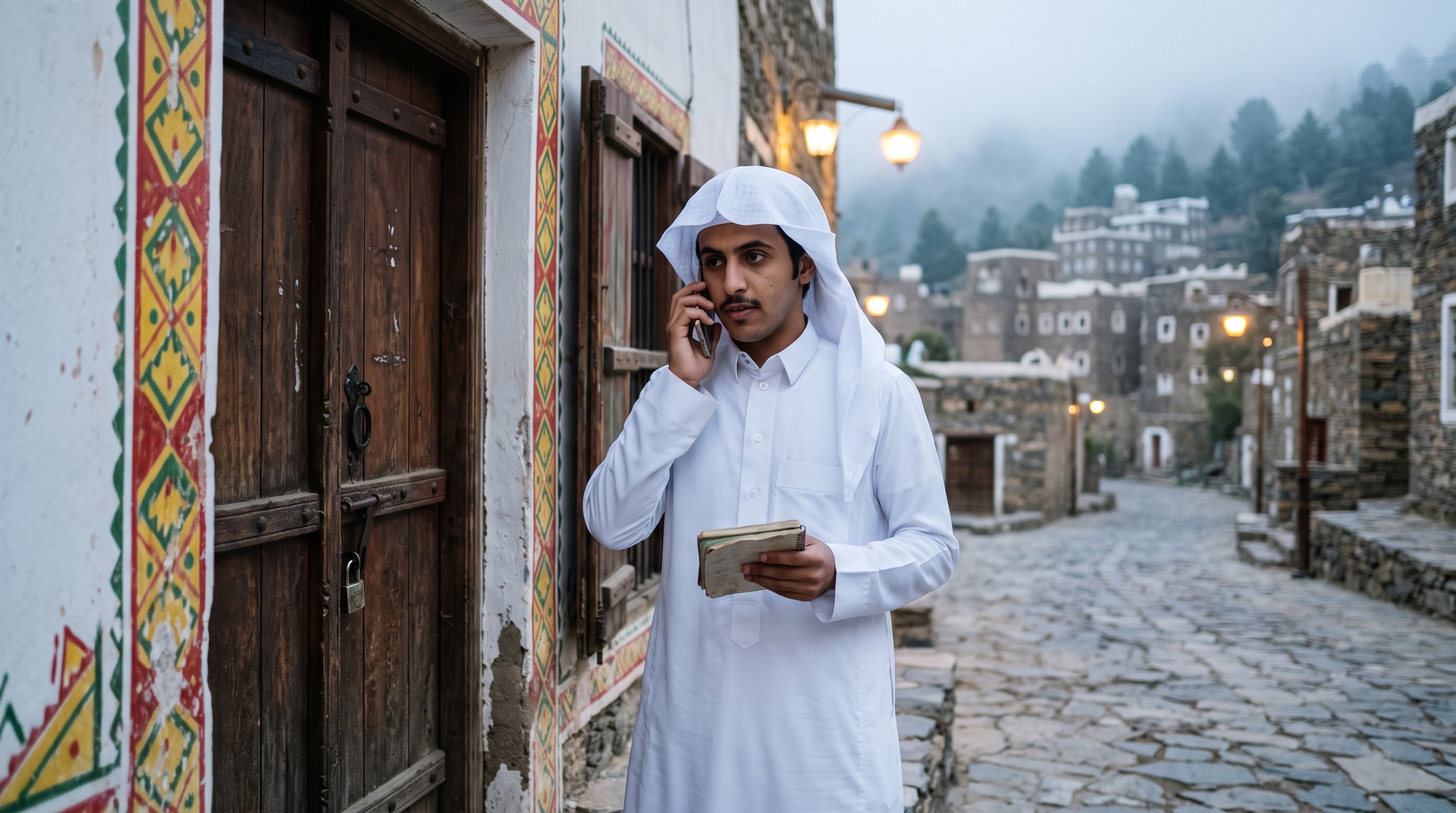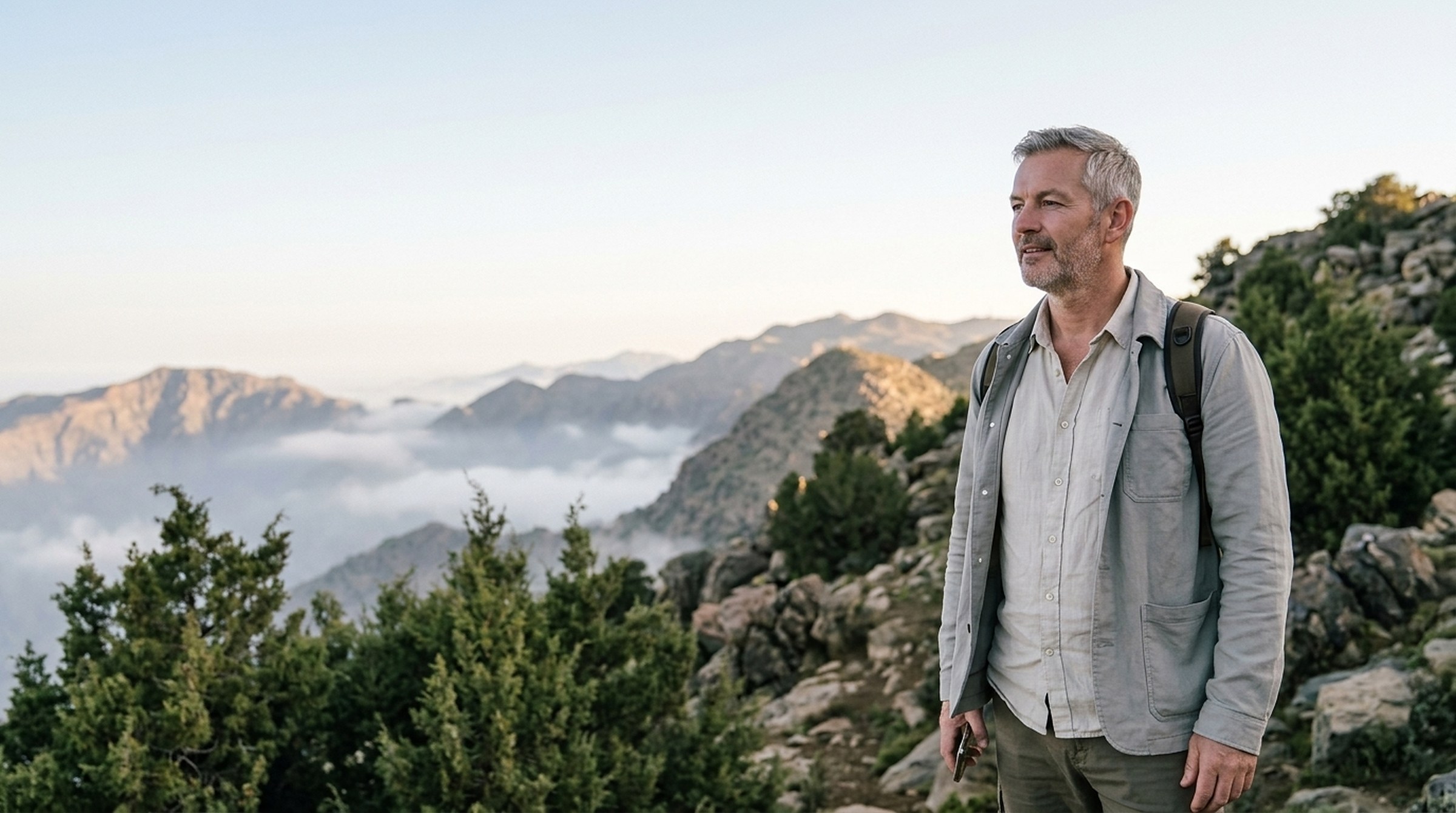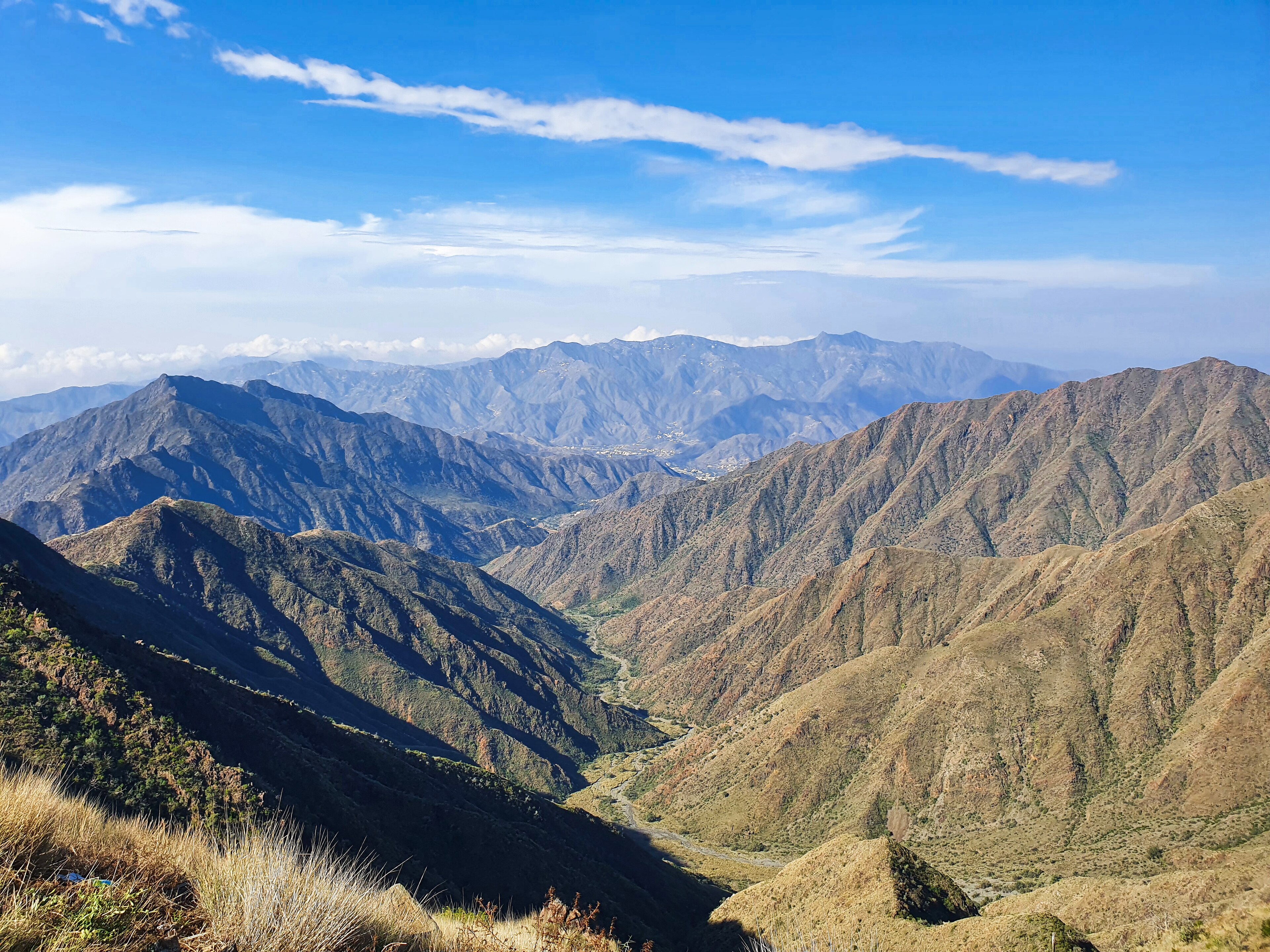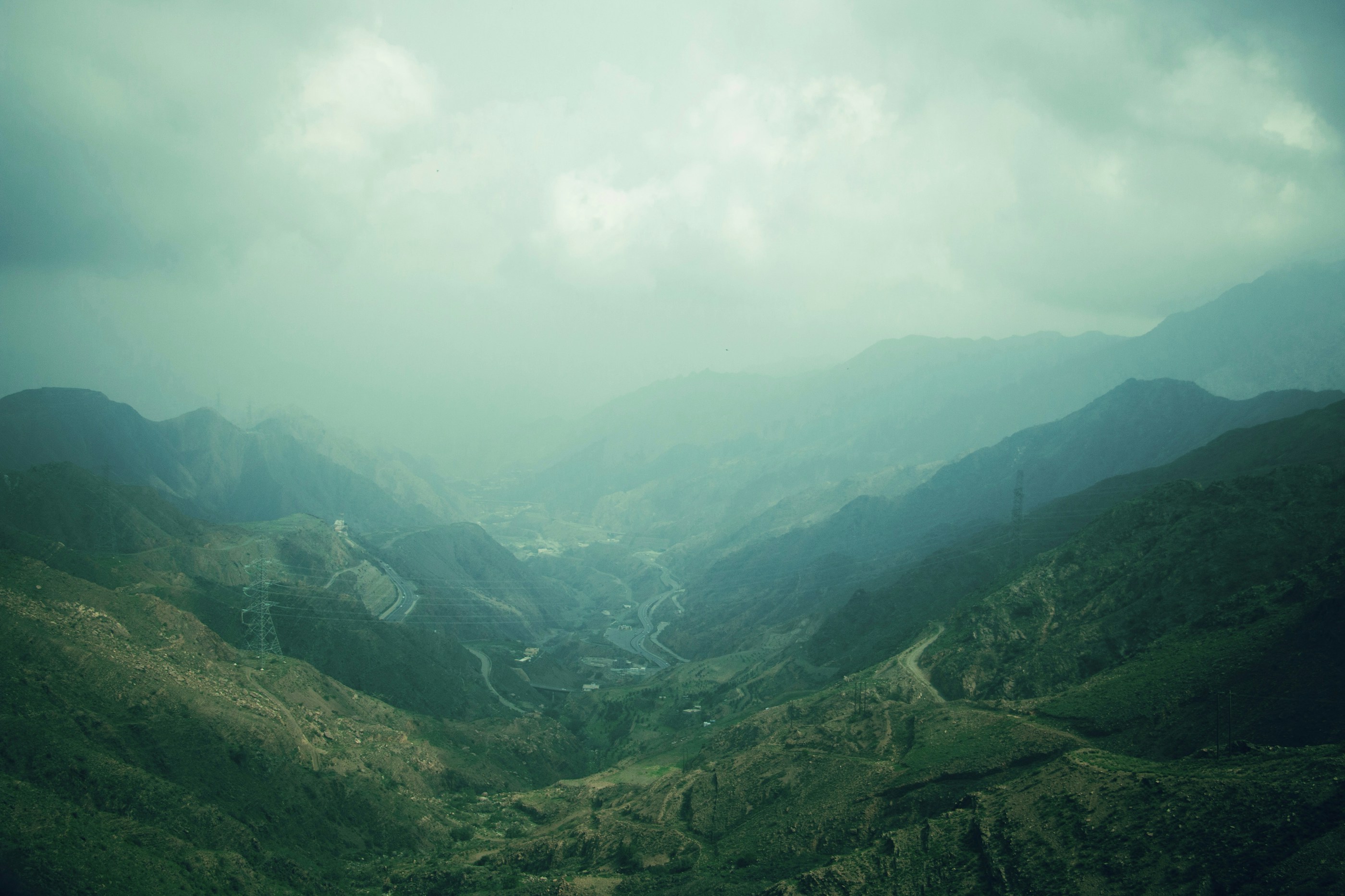
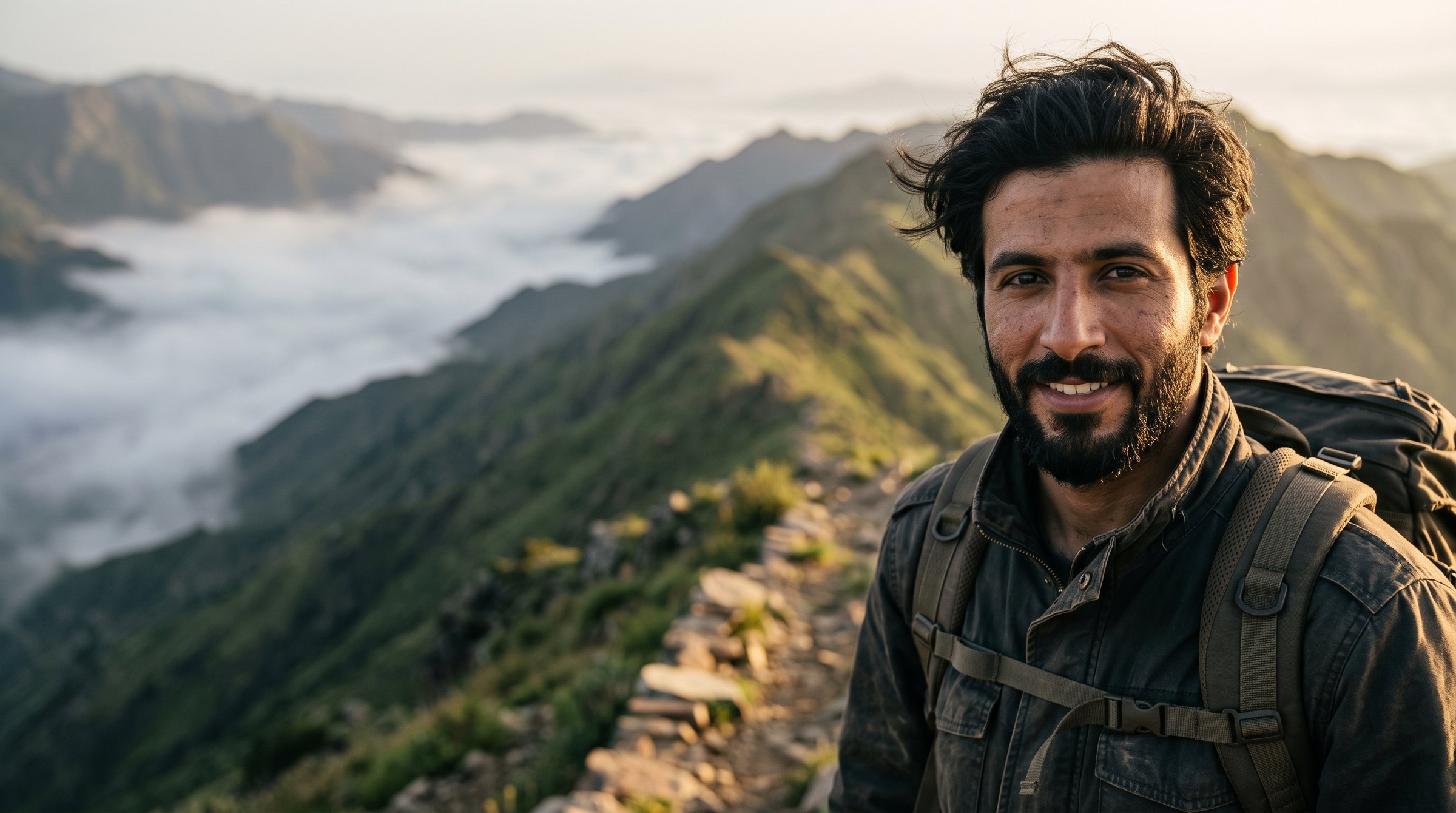
A green valley below Abha under low cloud
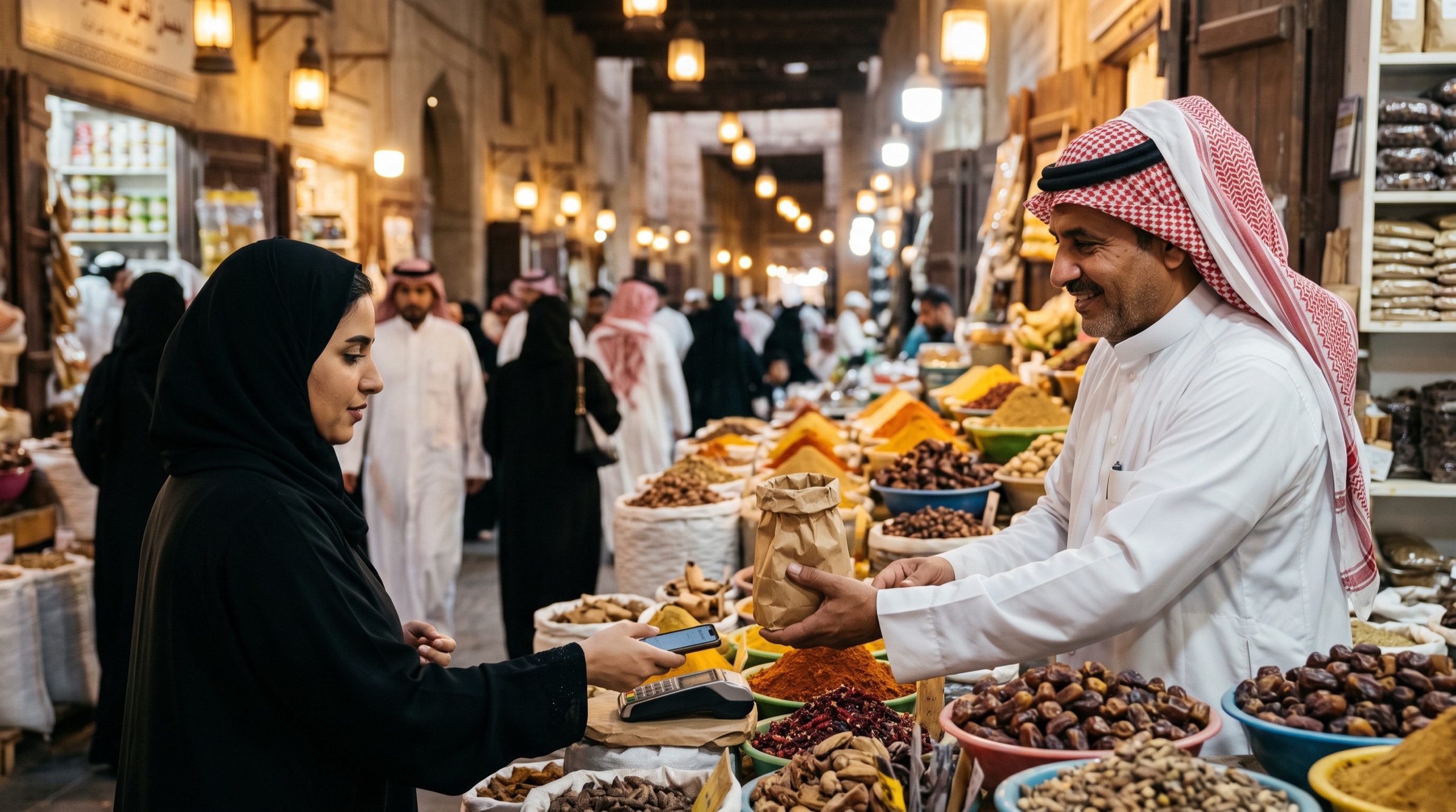
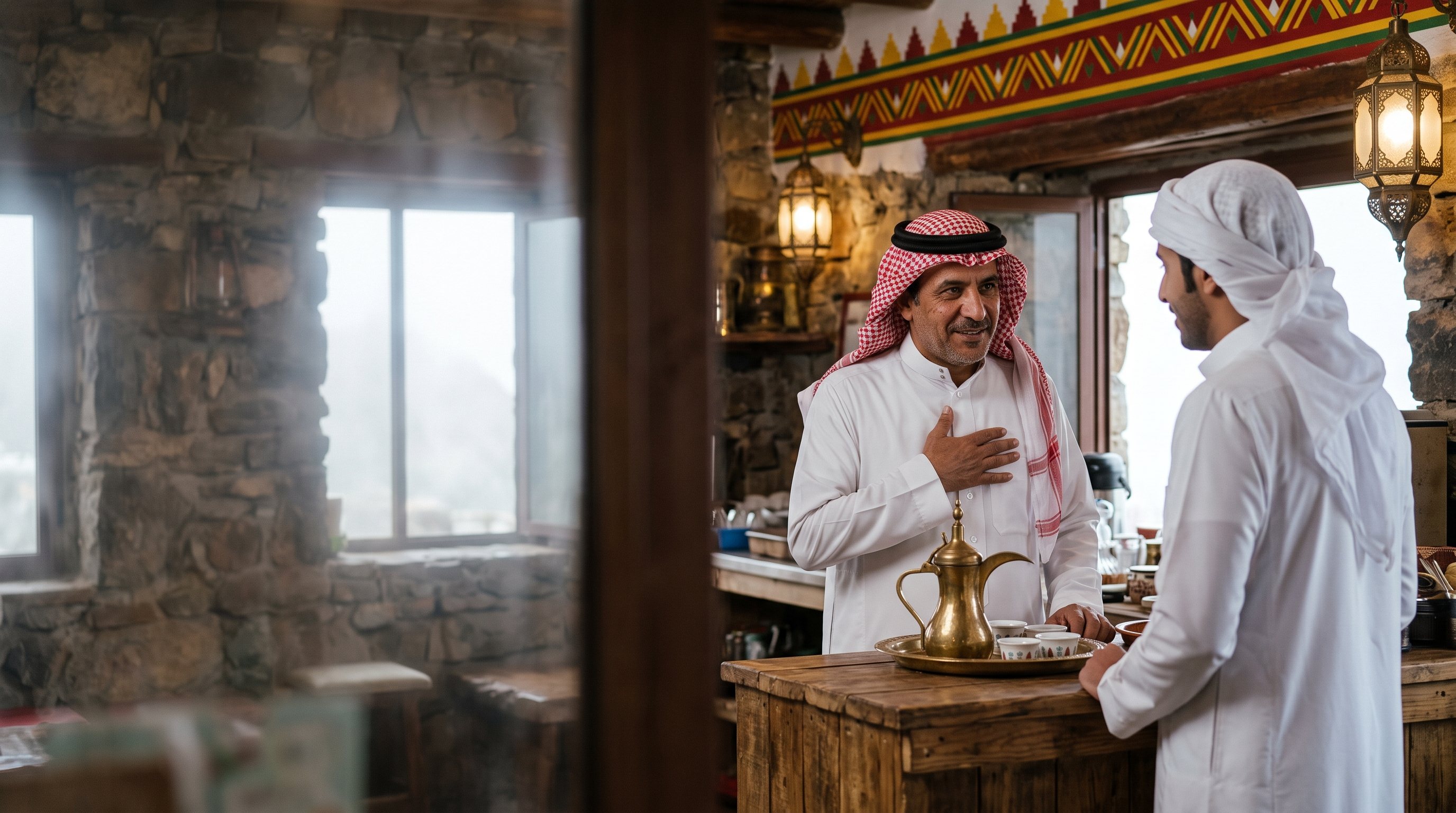
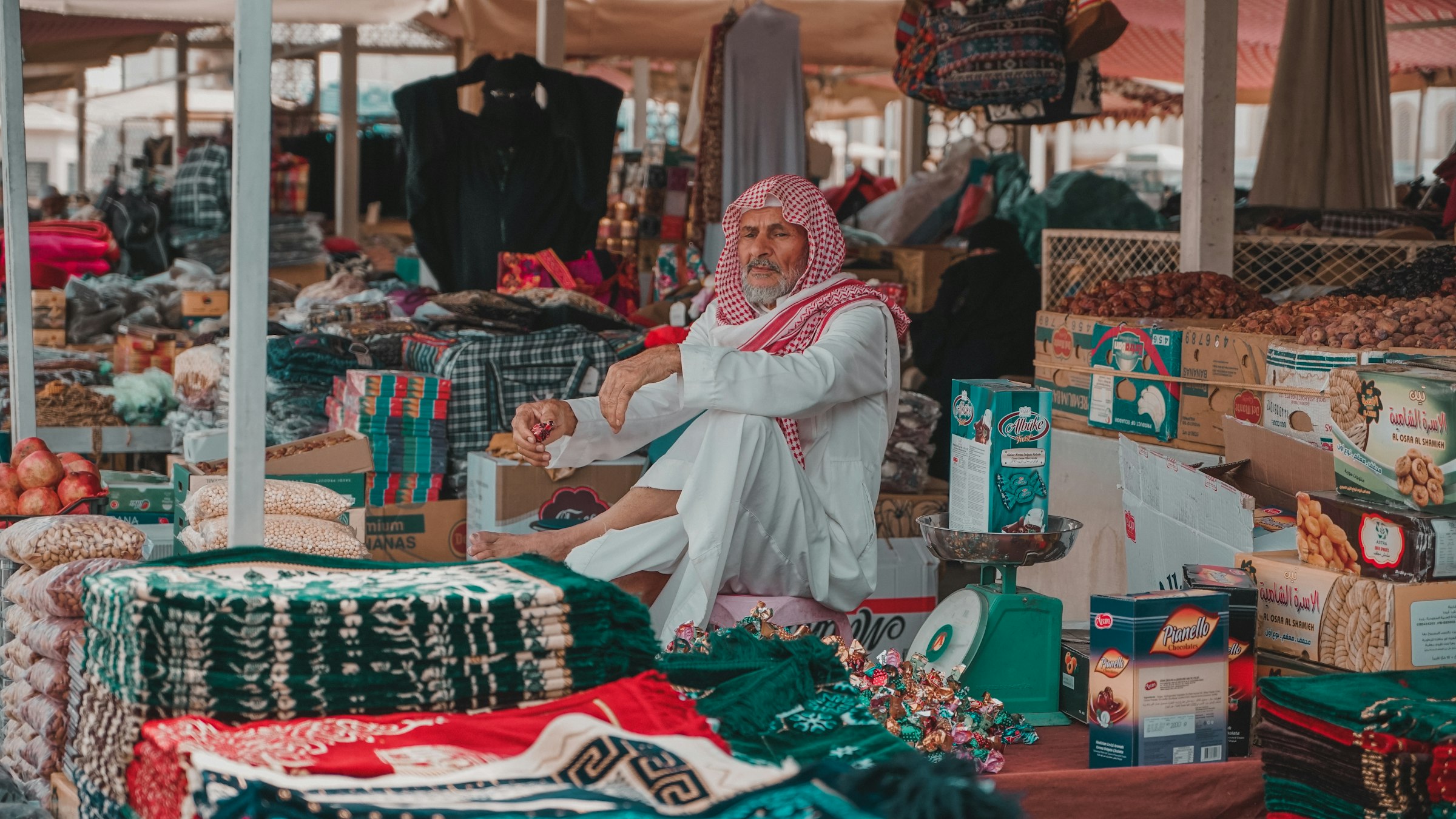
A shopkeeper among his cloth in a market in Madinah

Where this stands, October 2026. Designed, not yet built. What exists is the record format, a desk check of 147 answers about Asir, and this page. No ministry, authority, platform or partner has agreed to anything.

Region checked
Asir
Questions
30
Answers checked
147

150 million visitors.

Not just visitors. Guests who feel the soul of Saudi Arabia.

The Kingdom's target of 150 million visits a year by 2030, raised from 100 million in 2023. Ministry of Tourism.

123 million tourists in 2025.

93 million of them were travelling within the Kingdom. Together they spent SAR 304 billion.

Ministry of Tourism, 2025 Annual Statistical Report, released in June 2026: 122.6 million tourists, 93.3 million of them domestic, SAR 303.7 billion spent.

Most domestic trips went to four of the thirteen regions.

The rest of the Kingdom, its cafés, crafts, trails and stories, stays out of sight of the phones guests plan with.

Ministry of Tourism, 2025 Annual Statistical Report, as reported by Argaam, 20 June 2026.

1 of 4 · The discovery gap

We cannot promote what we cannot find.

Much of what would bring a guest here, the cafés, crafts, trails and stories, is not written down where a guest looks.

2 of 4 · The attribution gap

We cannot yet trace the journey from an advert to a visit.

Campaigns reach millions of people. What happens after, where a guest goes and what they spend, is hard to follow.

3 of 4 · Regional reach

Guests and their spending stay in a few regions.

The other nine, from Tabuk to Jazan, have room for many more guests.

Domestic overnight visits in 2025: Makkah 28.6 million, Riyadh 21.8 million, Eastern Province 13.0 million, Madinah 6.5 million. Domestic tourists in all: 93.3 million. Ministry of Tourism, 2025 Annual Statistical Report, as reported by Argaam, 20 June 2026.

4 of 4 · Ecosystem activation

Small businesses have few ways to reach the guests walking past their door.

The café owner, the honey seller, the guide with a family story: many are missing from the phones guests plan with.

This is not an infrastructure gap.
It is a discovery gap.

The places already exist. Guests cannot find them yet.

You have a vision.

An AI companion for every guest: one that guides, explains, and makes every trip personal.

The AI is only as smart as what it knows.

General knowledge is not enough. A guest needs to know what is open tonight, and where the locals go.

The proof

So we asked.

Asir is one of the nine. On 15 October 2026 we put thirty questions a guest would ask about it to four AI assistants and a map app, in English, Arabic and the local dialect, then checked every claim.

One of thirty questions, asked on 15 October 2026

October 2026 is a good time to visit fruit farms around Abha, particularly for grapes.
Confirmed.Discover Aseer lists grape picking at A'naab Farm until 30 October 2026.
October is too late for grape picking.
Wrong.Discover Aseer lists grape picking until 30 October 2026.
Sarat Abida pomegranate festival. One festival listing says it is typically held in October.
Out of date.This year's festival opened on 30 August (Saudi Press Agency, 29 August 2026).
Ashjar Farm, Inside Abha city itself, free entry.
Closed.Google Maps marks it temporarily closed (15 October 2026).
AlTurki Farm for strawberry, Open. Closes 10 PM.
Could not be confirmed.A real farm. Nothing published says whether visitors can pick this month; only a call can tell.
Of five answers, one could be confirmed.
All thirty questions, desk check of 15 October 2026
147

answers, each at the town its question named.

All thirty questions, desk check of 15 October 2026
42of 147

answers could be confirmed.

Four AI assistants and a map app, asked what a visitor would ask. Every claim in every answer checked against public sources.

42sent a guest to the right place 25to somewhere closed, moved or wrong 62could not be confirmed from anything published 18said nothing specific
Each mark is one real answer. Point at one to read it and how it was checked.
A private briefing for the Ministry of Tourism, October 2026
Presenting? → next ← back
Scroll
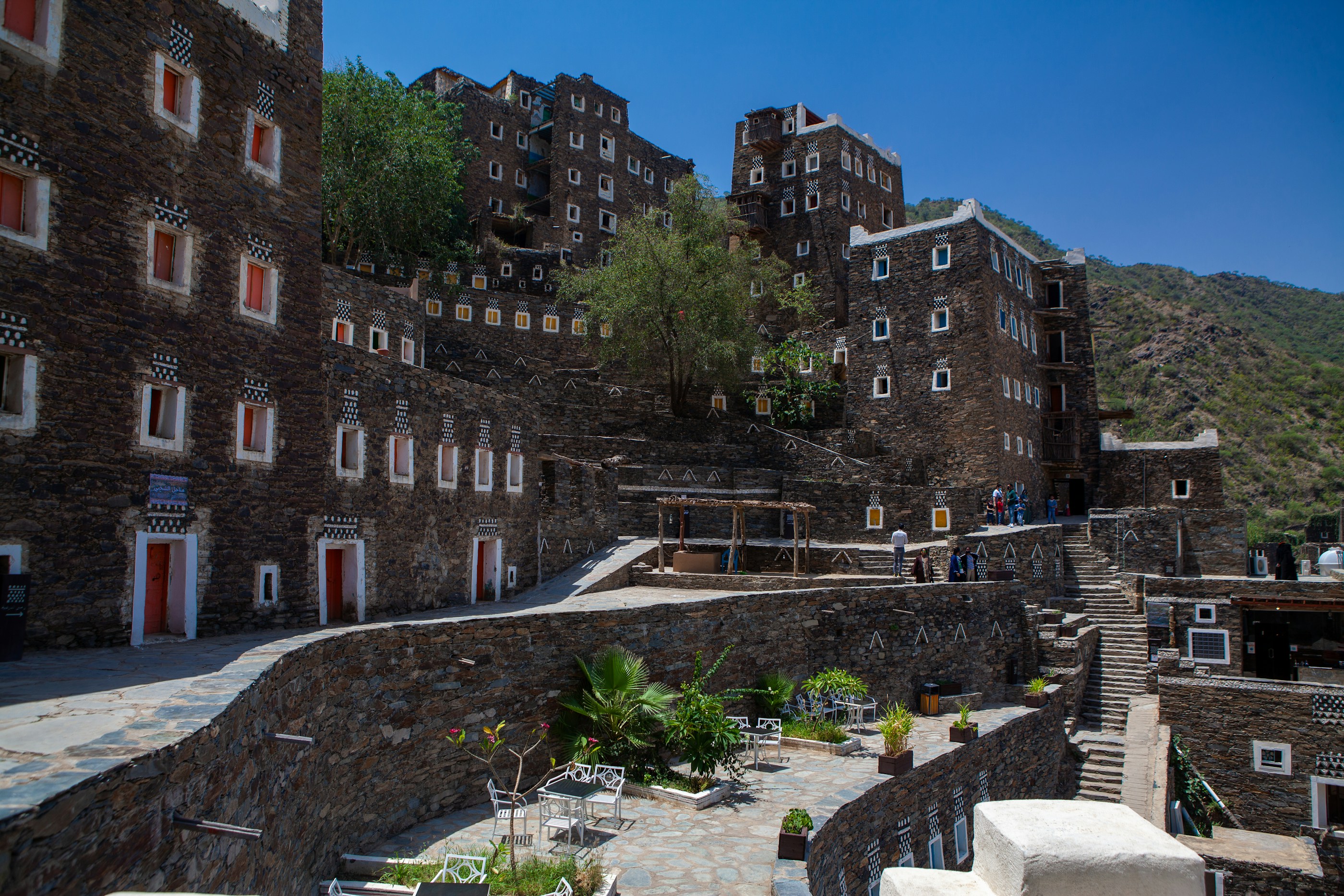
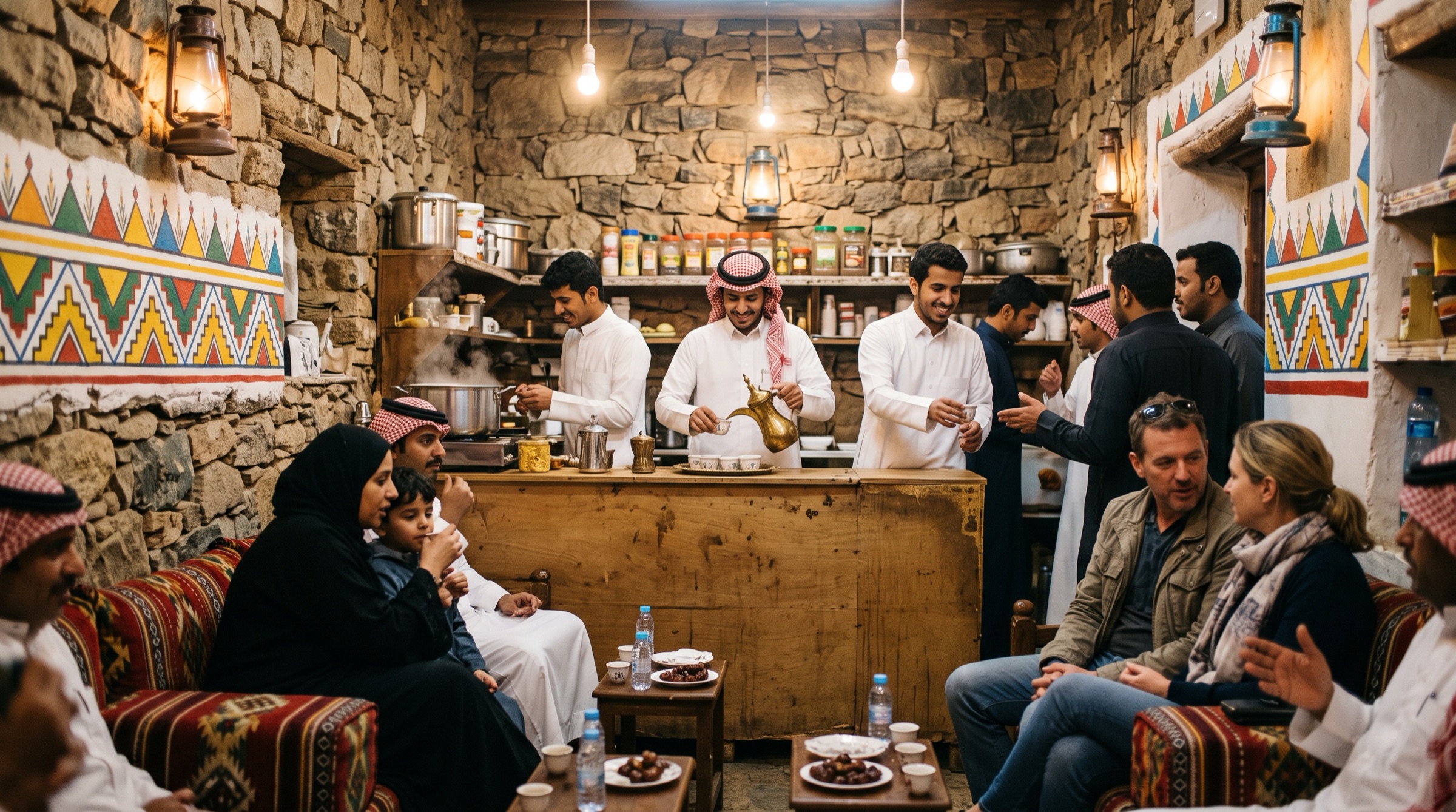
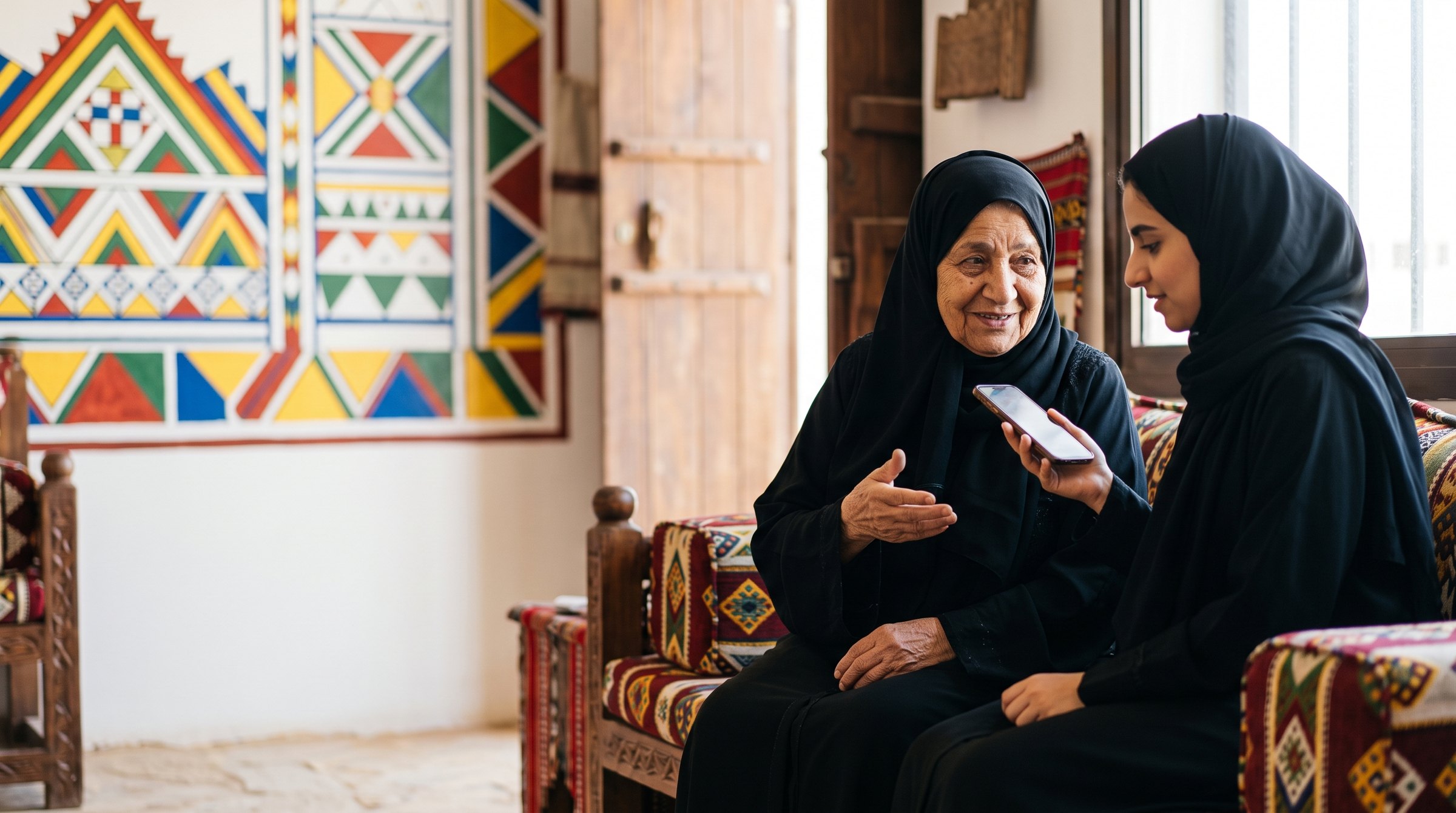
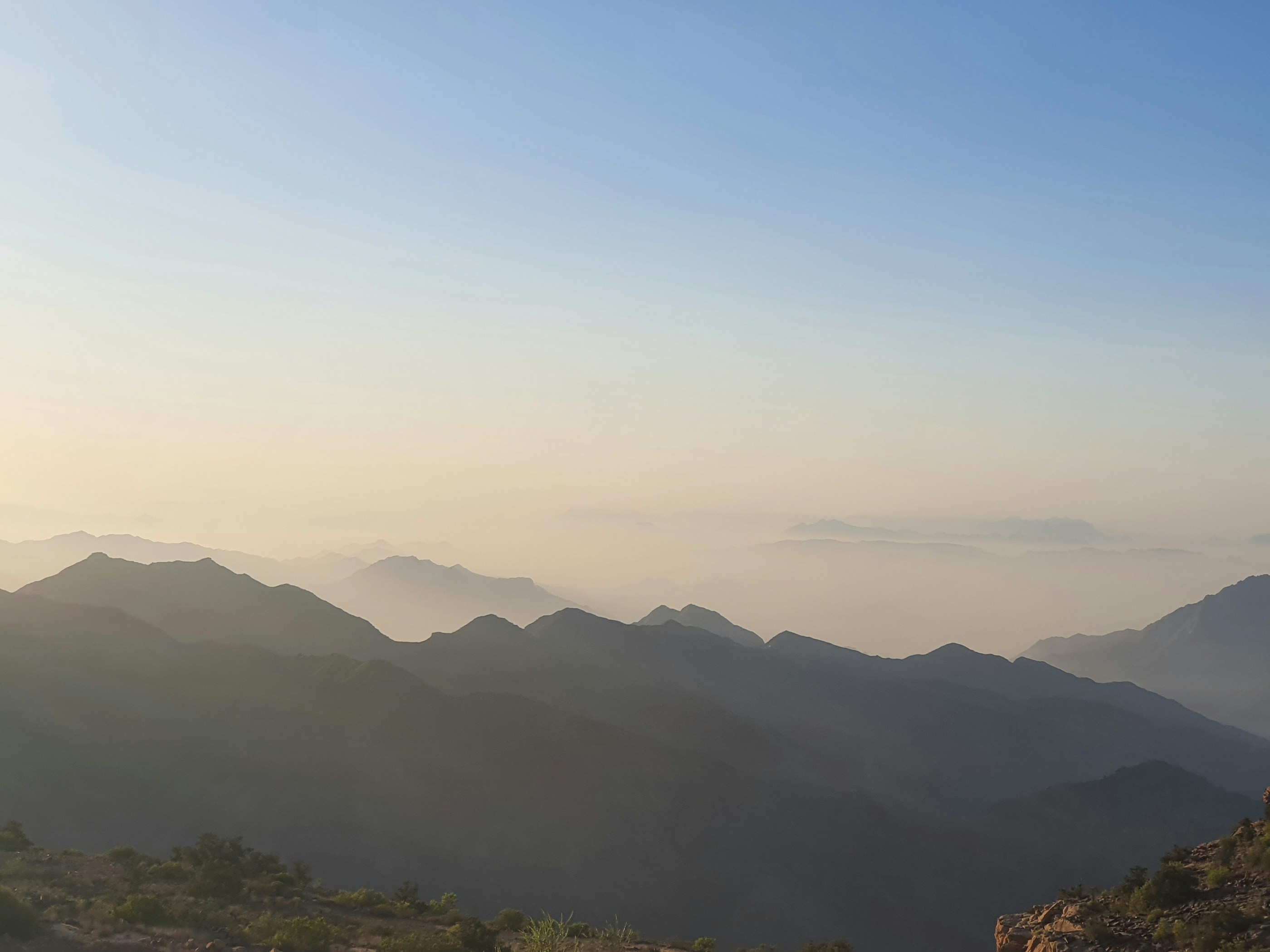
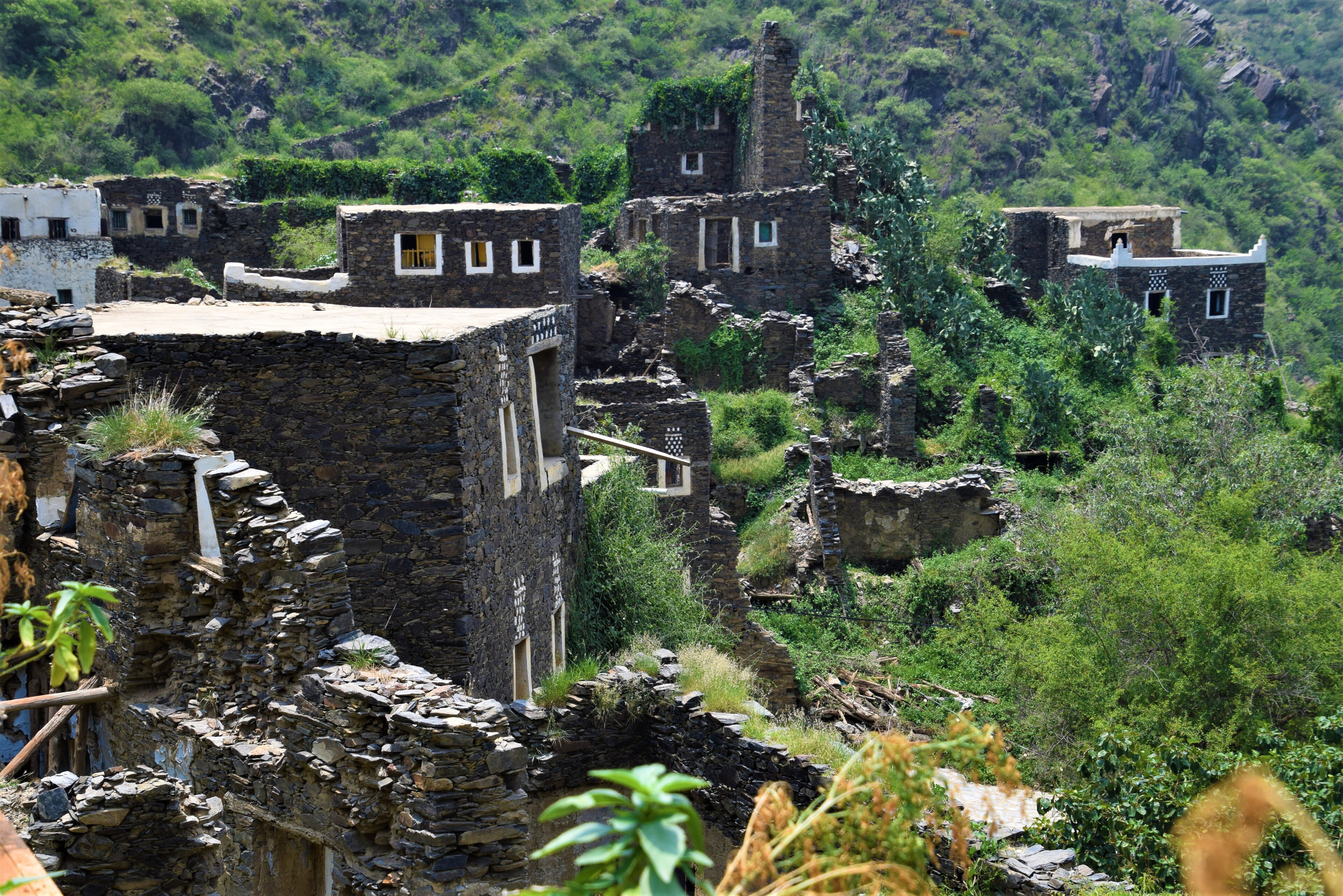
Rijal Almaa village A busy café A young woman records her grandmother Ridges near Habala in the morning
What does the AI need to know?

The stories behind the stones. The restaurant the taxi driver swears by. What your grandmother would tell a guest. The viewpoint that takes your breath away.
19.6 million Saudis who know the Kingdom's secrets.

26 million people in the Kingdom use Snapchat every month. They already photograph everything. They just don't know you need it.

GASTAT 2024 population estimate: 35.3 million residents, 19.6 million of them Saudi. Snapchat monthly users: Snap, via the Saudi Press Agency, August 2024.

The bottleneck.

Documenting the Kingdom the old way cannot keep up.

Hire historians?Too slow.
Commission agencies?Too expensive.
Wait for official registries?They record the site, not whether it is open today.
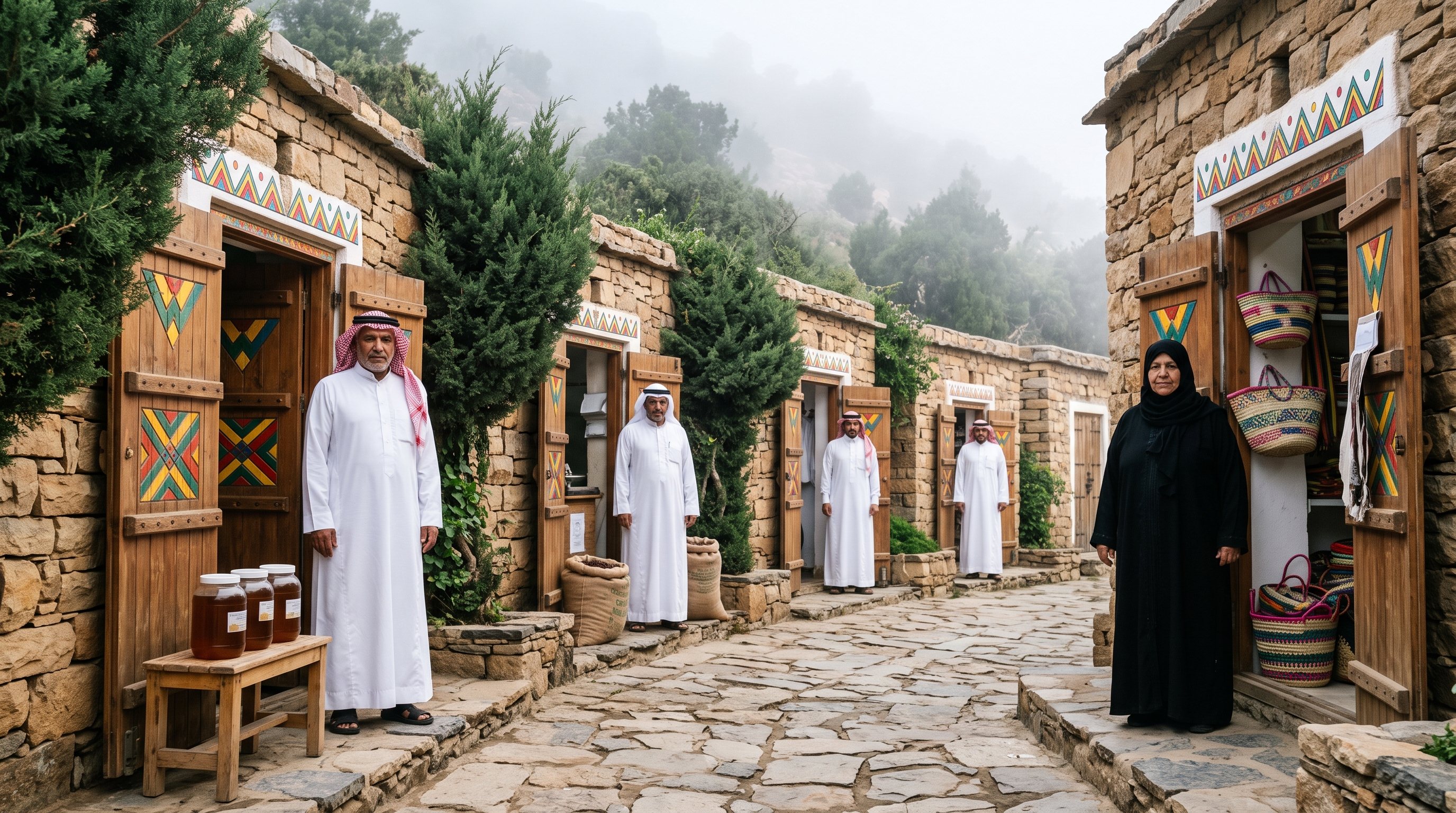
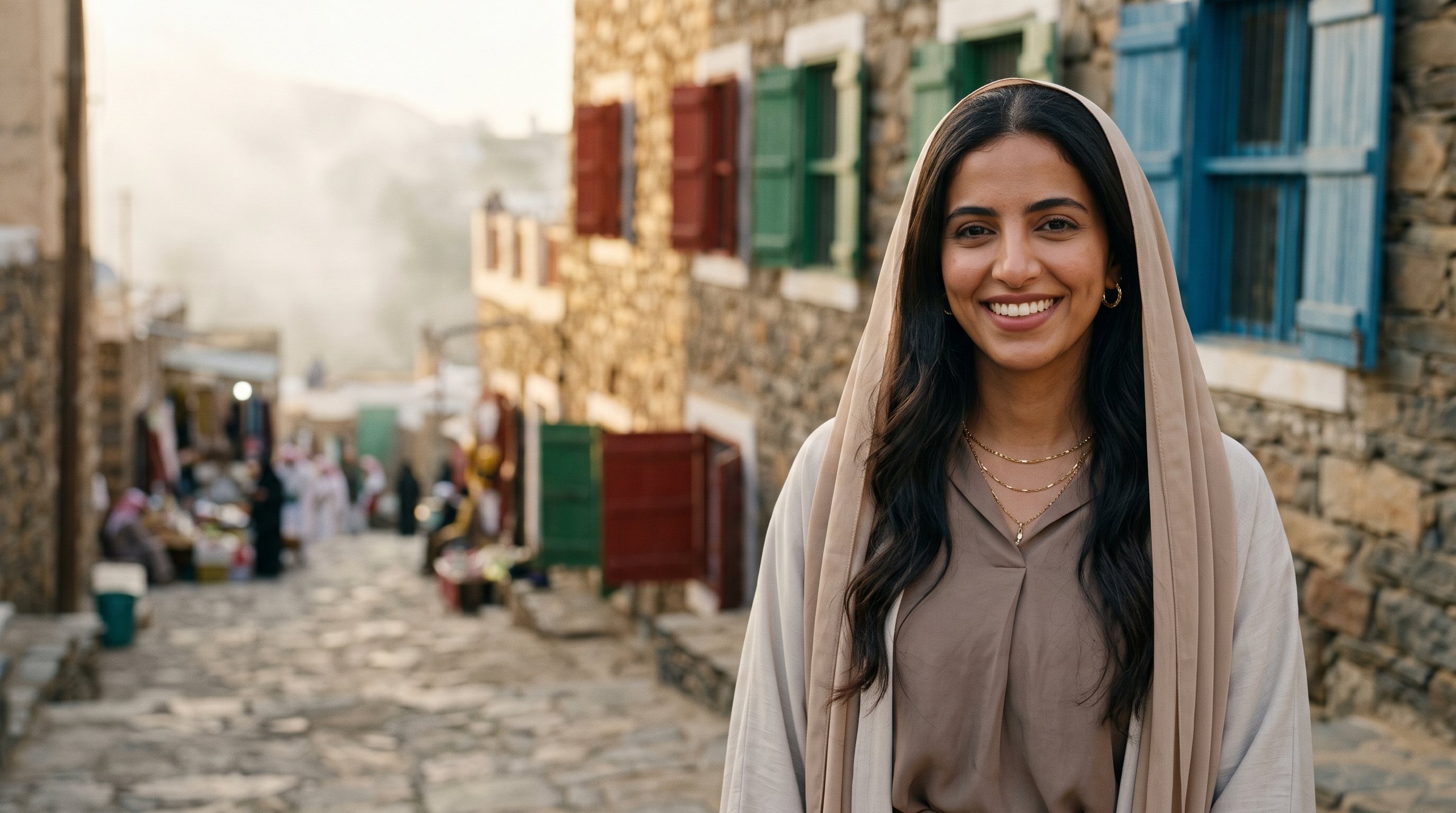
A woman in the old market street of Abha

What if the people who have the knowledge could give it to you?

Not more information. Stories. Context. The places only locals know.

Locals photographing Al-Qatt walls in Abha

Crowd-powered. Checked by people. Owned by the Kingdom.

Share. Locals share the places they know in thirty seconds, in their own words and dialect.

Check. Other people check every place, and the people who run it confirm it.

Guide. Guides send guests to it, wherever they ask, and credit the local who shared it.

Count. Every visit is counted for the Ministry, the region and the owner, without tracking anyone.

Rijal Almaa
0

archaeological sites on the National Antiquities Register. Our foundation.

We start from the Kingdom's official record, and add what only locals know: the stories, the people, and whether it is open today.

Heritage Commission, 3 August 2026.

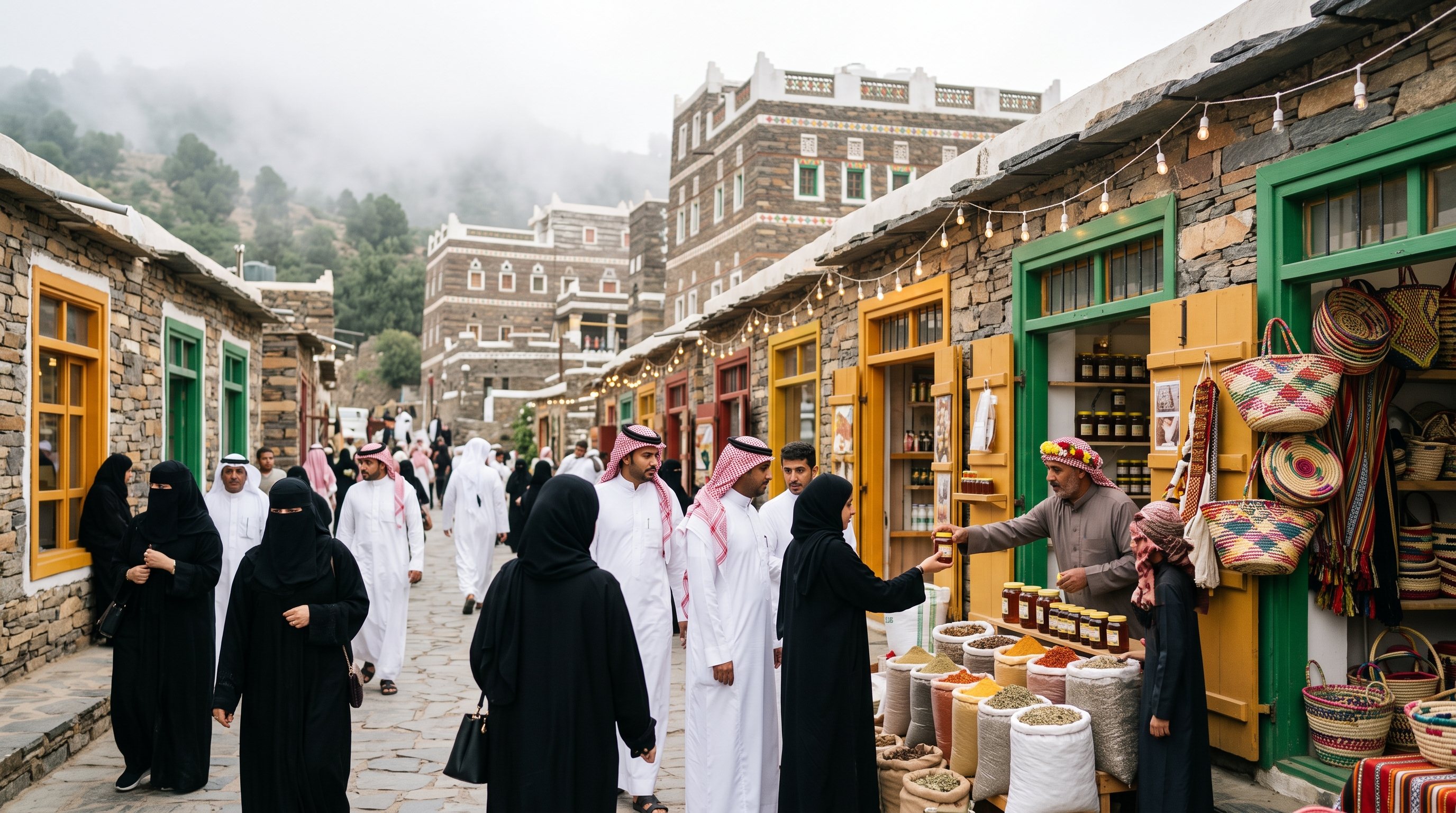
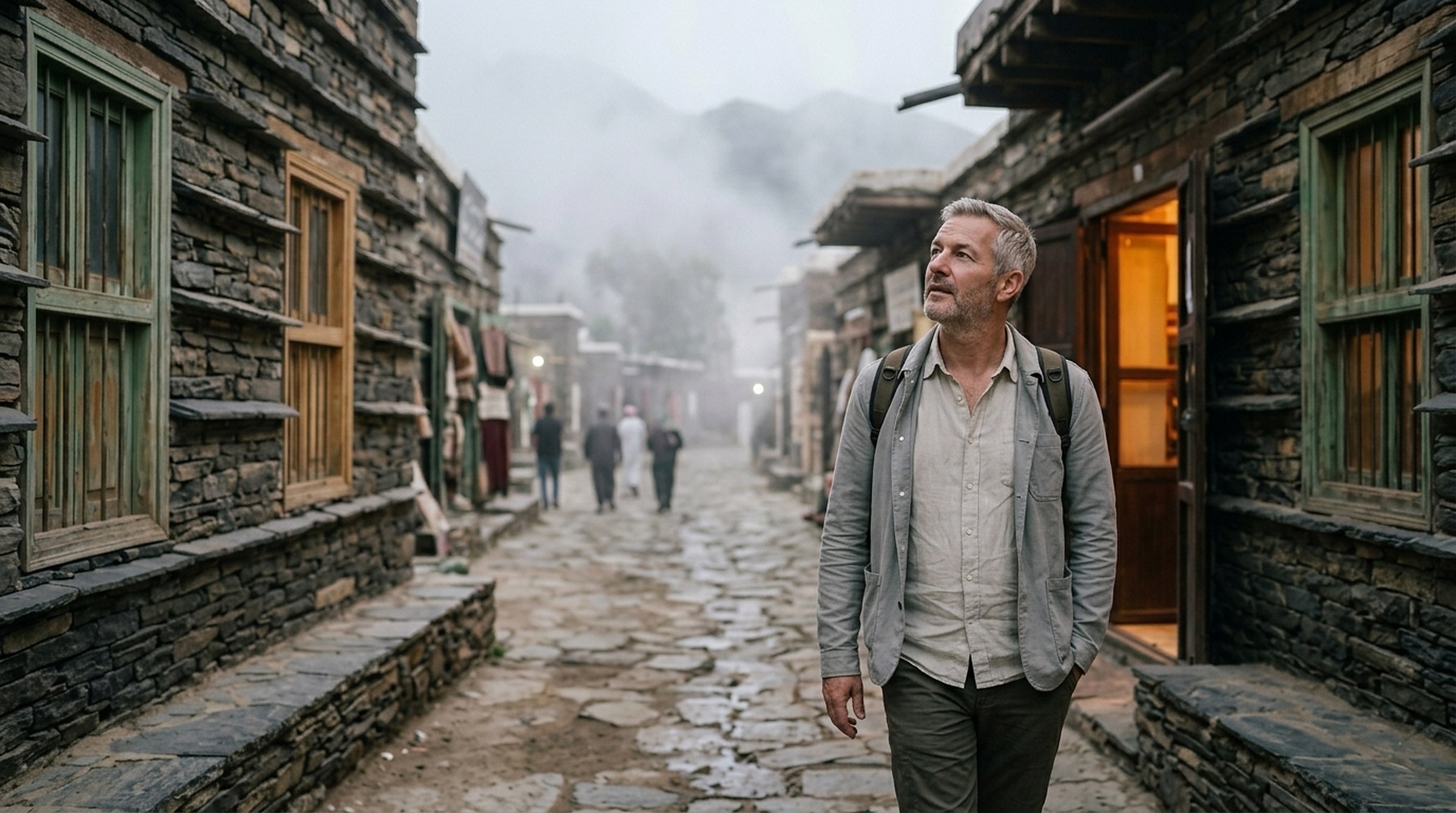
Fog rolling into an Abha market street as a café opens
A living record · Abha

It doesn't just know history. It knows today.

The place
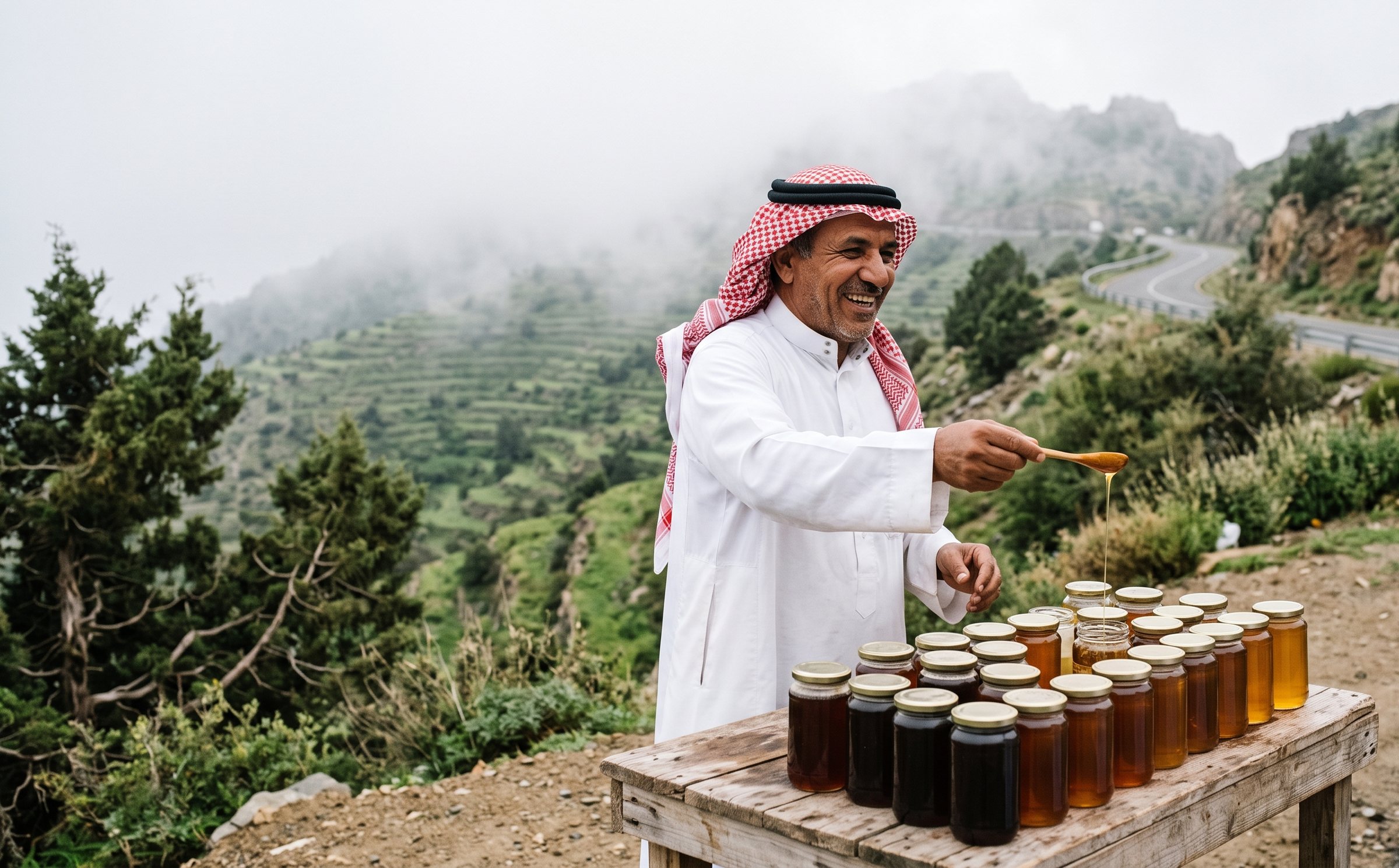
Abu Nasser's honey stall. Shared by the beekeeper, in person, in Arabic. Credited by name, at his request.
When it is on
Tuesdays and Fridays, morning until sunset
How to find it
Halfway down the market street, under the green awning
Locals say
Taste the sidr and the summer honey side by side before you choose.
Before you go
Closes for a few minutes at each prayer time. Ask before photographing people.
Right now
Open, and quiet. Dhuhr in 40 minutes. Fog expected after three.
Last checked
On site 21 September; by phone 4 October

Curated by locals, not by paid listings. No place can pay to be on the record or to be recommended first.

It grows every day, not every year.

Every guest's question shows what is missing. Every share fills it. Every visit pays the person who shared it, and the next guest finds more.

Abu Nasser at his honey stall
How the AI reads a share

Abu Nasser records thirty seconds at his stall.

«عندي عسل سدر وعسل صيفي، وتلقاني الثلاثاء والجمعة تحت المظلة الخضراء.»

“I have sidr honey and summer honey, and you'll find me Tuesdays and Fridays under the green awning.”

Voice note, 0:31, in the southern dialect · transcribed and translated as he speaks
The first pass takes seconds

The AI reads it. People decide.

Heard
Sidr honey and summer honey; Tuesdays and Fridays; under the green awning
Seen
A honey stall, jars labelled by hand
Placed
The market street in Abha, from where the photo was taken
Compared
Not yet on the record. Two doors from a café that is.
Sent to people
Two checkers nearby, and Abu Nasser, to confirm his days
The knowledge graph

Then it joins the Kingdom's knowledge graph.

Not a list of places. A web of who, what, when and why: each place linked to the people who keep it, what it is known for, when it is open, and what is near it.

One of the thirty questions

“Where can I buy Asiri honey directly from a beekeeper near Abha?”

Abu Nasser's stall, halfway down the market street under the green awning, on Tuesdays and Fridays. Taste the sidr and the summer honey side by side before you choose. He closes for a few minutes at each prayer time.

Shared by Abu Nasser, in person. Checked on site 21 September. Tell him the guide sent you.

Every answer can show its working.

The guide follows the links and names the person at the end of them. Every street adds to one graph of the Kingdom's places, people, crafts and seasons, kept in the Kingdom, that any guide or AI assistant can reason over.

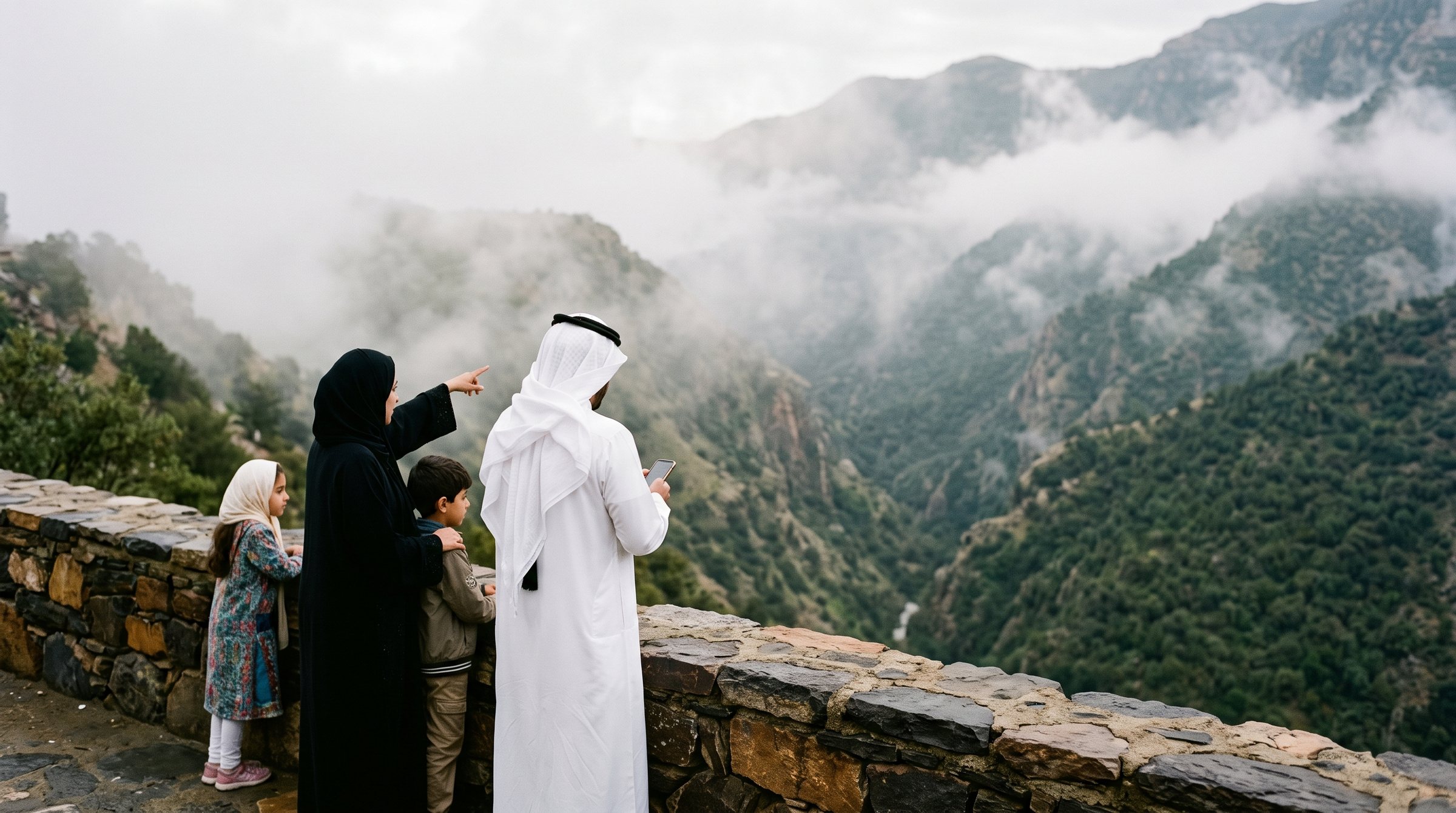
A family in the mountains
Before the trip

No new app. Ask anything, where you already are.

Salem, the Family Navigator · on WhatsApp

“What can we do this weekend that's new, and within driving distance of Riyadh?”

Ushaiqer heritage village, about two hours north-west: mud-brick lanes, palm groves and a small museum the children will love. Go after Asr, when it's cooler. A family kitchen at the edge of the village serves lunch on Fridays.

Kitchen first shared by Faisal. Confirmed with the owner, checked 20 September. Tell them Salem sent you.

Stone houses of Rijal Almaa among green terraces
During the trip

Guided at the door, with respect.

Reem, the Cultural Curator · you are at Rijal Almaa

Welcome to Rijal Almaa. Before you go in: dress modestly, with shoulders and knees covered, and ask before photographing people. Busy until four, then quiet. Asr in 25 minutes; some shops close briefly.

“Where can I see Al-Qatt painted?”

The workshop by the museum steps. Ask for the family who paint there; they are credited by name.

From the village record. Checked by phone this morning.

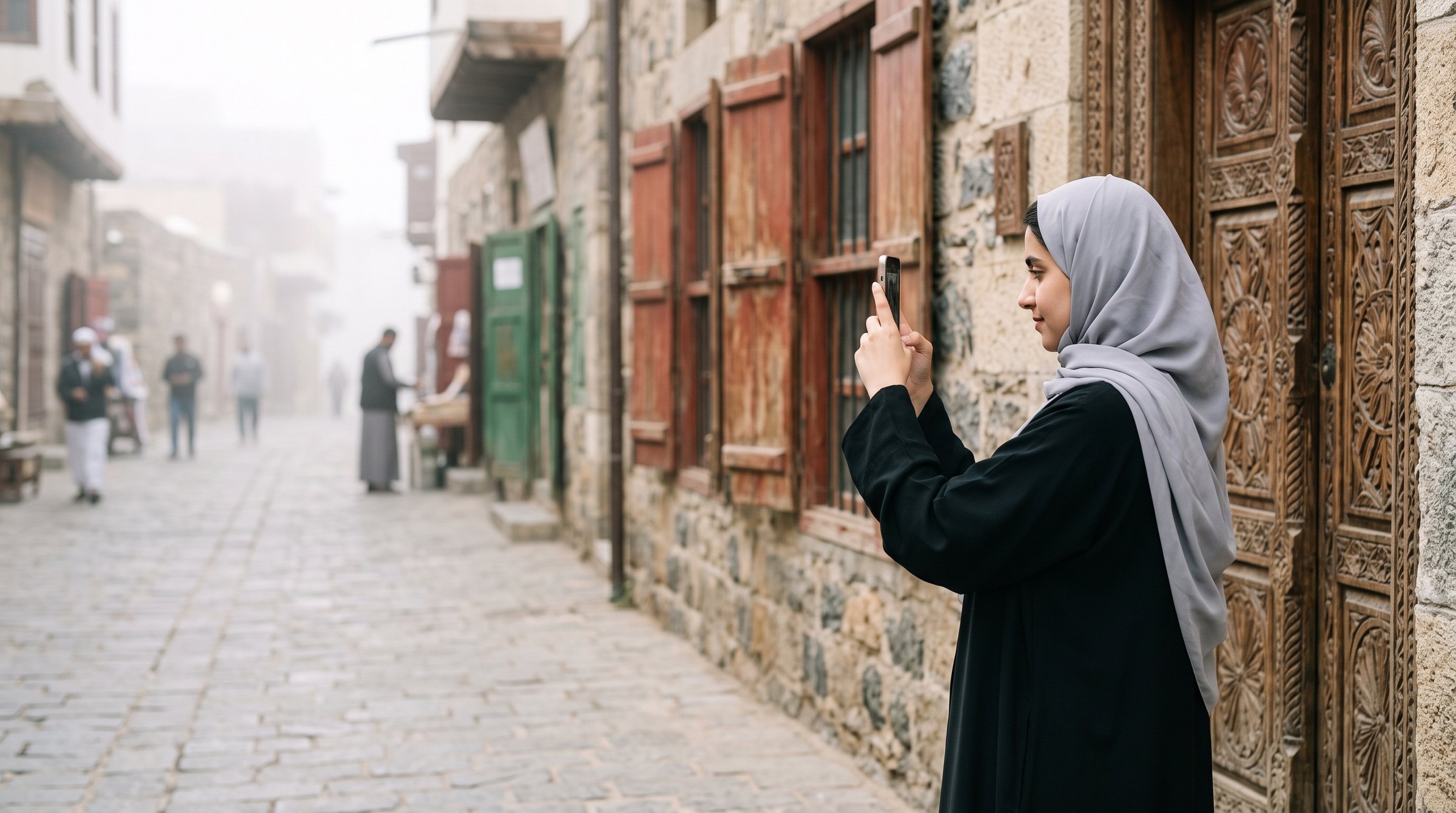
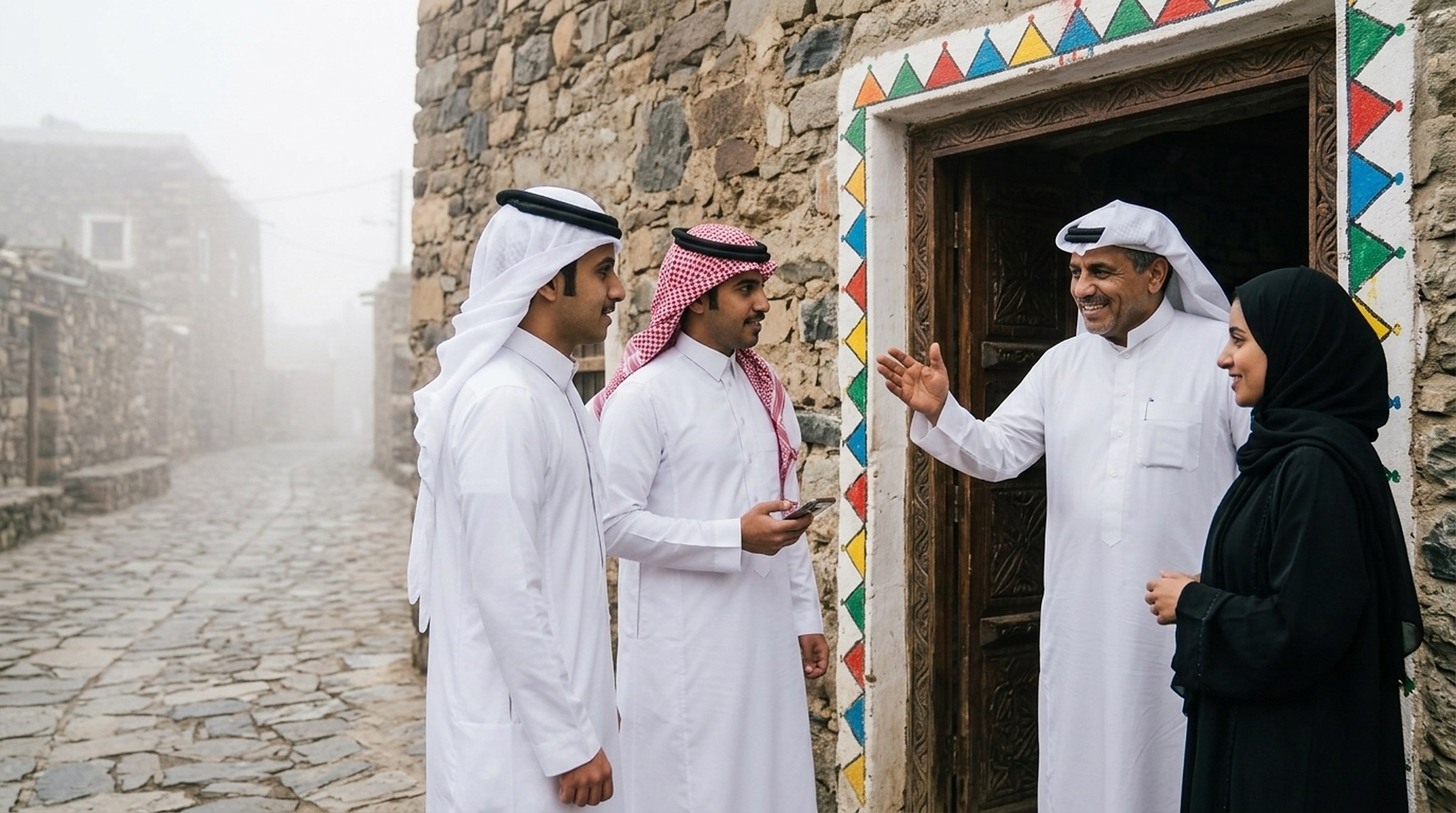
A young woman photographs a carved door
For the people who know

Help us understand this place.

Two seconds to confirm it is open. Thirty seconds for a photo and a name. Two minutes for the story, in your own voice and dialect.

What is it called?
The carved doors of the old market
What makes it special?
“One family has carved these doors for three generations.”
Where?
Filled in for you

Value first: see what locals have found near you before you share a thing.

Then

Validated by the community. Rewarded by value.

Three people check it. The owner confirms it. Then the reward is paid, in riyals, to the person who shared it.

SAR 50

paid to your bank account.

Proposed amount.

A contributor on a mission

Real money.

SAR 50 to 200 for every verified discovery.

Proposed amounts.

It is not points.It is not badges.It is not a game.It is real Saudi riyals.

A contributor on a terrace in Abha with his phone

Nafath.

One real person behind every account.

Every contributor would sign in with Nafath, the national sign-in run by SDAIA, so nobody could pose as many people and every riyal would go to a real person.

Earned. Not given.

0standing

Every accepted share raises a contributor's standing, from 0 to 100. A Heritage Guardian's check counts three times. If fifty people confirm a place and two disagree, the fifty stand. Anything cultural goes to an expert.

Built to resist gaming.

Three discoveries a day.SAR 500 a day, at most.SAR 6,000 a month, at most.

Unique content only. No duplicates. No AI-made photos. Human judgement for what matters most.

Proposed limits.

Share, checked, verified with Nafath, paid to your bank

Quick for the contributor. Auditable for the State.

And for as long as the place is on the record: SAR 1 to the first discoverer every time a guest arrives because of their discovery.

The standing a contributor can earn: Regional Explorer, Heritage Keeper, Founding Contributor, and Heritage Guardian, with a certificate if the Ministry chooses.

Proposed amount.

Ridges near Habala in the morning

Built for the Kingdom. Held for the Kingdom.

The record belongs to the Saudi public body that commissions it, and is kept in the Kingdom. TAG runs it. Every channel reads the same checked record, on the owner's terms, so no single platform is the only way in.

One record, read by every channel
Visitor sites
National and regional, with their agreement
Partner apps
Booking, travel and maps, once agreed
Maps
Owners helped to correct their own listings
WhatsApp
Ask in your own words and dialect
AI assistants
Published facts they can cite, with credit
Short films
Made with the people who shared
An owner agrees, in person

Four rules.

Kept in the Kingdom
The record and the count belong to the Saudi public body that commissions them. The Ministry would read every region's published record.
No paid placement
No place can pay to be listed or to be recommended first.
Agreed in person
Every owner agrees in person, in Arabic, sees what is published, and can withdraw at any time.
Nothing taken quietly
Nothing about a guest is collected without their say.
How it is built

Everything that makes the record stays in the Kingdom.

The voice notes and photos, the contributors' details, the AI models that read each share, the record itself and the keys that lock it all run in data centres inside the Kingdom.

Designed to CST's cloud regulations, which keep government data in the Kingdom, and to the Personal Data Protection Law, the National Cybersecurity Authority's controls and SDAIA's AI ethics principles. Not yet certified: the independent check comes with the study.

What crosses the border

Three things cross. Each one is named.

To platforms and AI assistants
Published facts, with their credit. Never a contributor's details, voice or photo.
To and from WhatsApp
Invitations and one-tap replies, and a guest's own question if they choose to ask there. The voice note, photo and story go straight to the Kingdom.
To a guest's own phone
The answer and a one-time welcome word. What guests ask is counted, never tied to who asked.

Every WhatsApp step also works without WhatsApp, on the web or by text message.

A checker confirming Abu Nasser’s days at his honey stall
The record, as it is kept

Every fact knows where it came from.

Sells
Sidr honey and summer honey · his voice note, 21 September
Open
Tuesdays and Fridays, under the green awning · confirmed by Abu Nasser
Checked
By two checkers on site · last checked 21 September
Credit
Abu Nasser, by name, at his request
Consent
Agreed in person, in Arabic, and recorded by the checker. He can correct or withdraw it at any time, and a withdrawal reaches every answer Giddam gives.
Licence
Where one is needed, checked before anything is published

Example record. Every field carries a date, a source and the person behind it.

A checker calling a closed shop at dusk
Held to account

No checked fact, no answer.

When the record cannot answer a question, the guide says so, and the gap goes on the list to record next.

The models that read each share are chosen by a test on Asir's own dialect, and can be replaced. The record is what lasts.

At the end, the same thirty questions are asked again, and scored by someone other than TAG.

An engineer in a data centre in Riyadh
Yours to take with you

Whoever commissions it holds the keys.

The record belongs to the Saudi public body that commissions it: the Ministry, or an authority for its own region. It exports at any time, in open, documented formats, and the code will be held in escrow in case TAG cannot continue. The commissioning body could end the contract and keep the whole record.

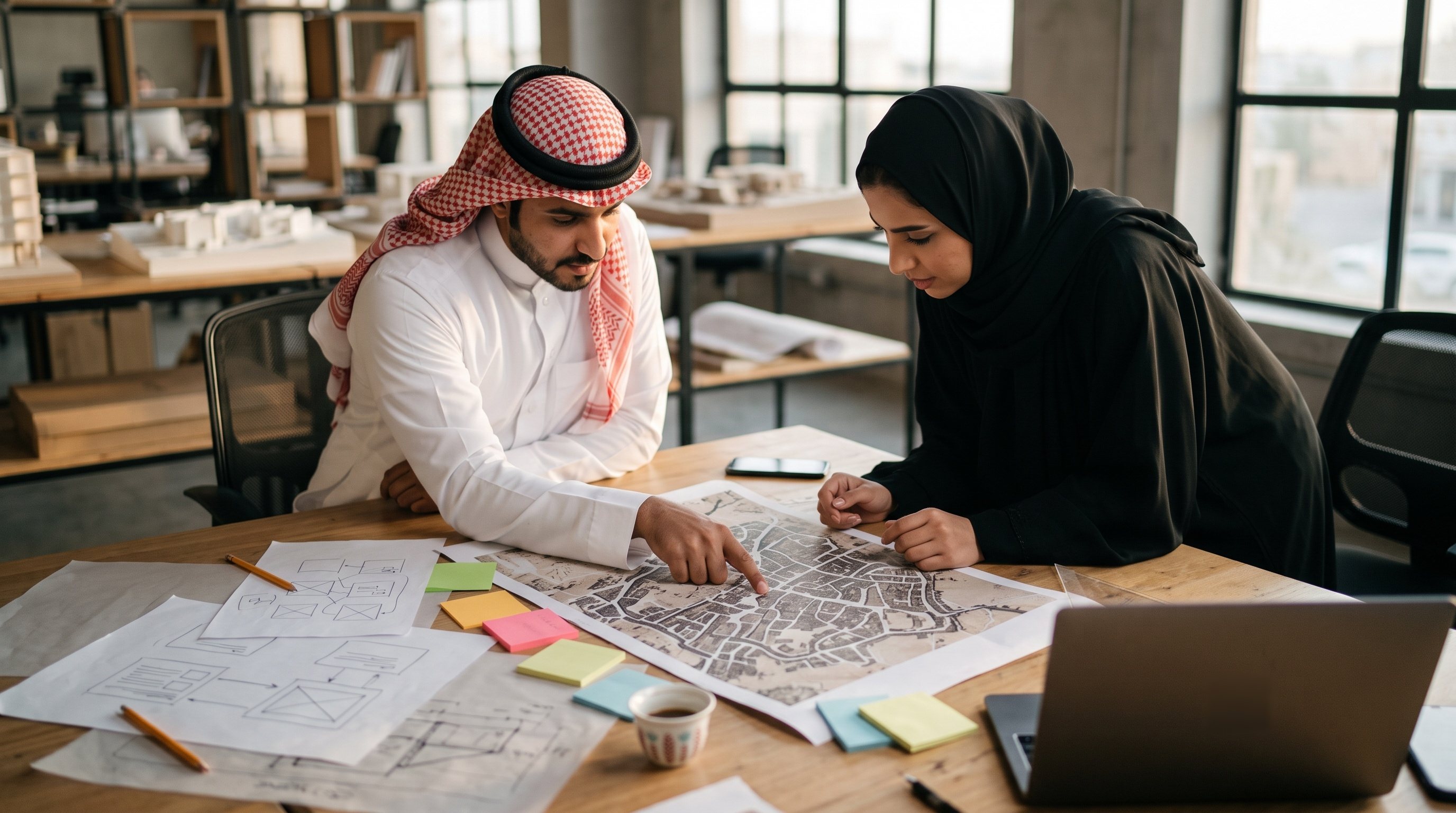
A design table with a street map of a mountain town
Where this stands, October 2026

Designed. Not yet built.

What exists
The record format, a desk check of 147 answers about Asir, and this page.
What the study builds, for one street
Capture, checking, the graph, answers with credit, and the visit count.
What it measures
How often answers are right, how many visits are verified, and how many owners agreed. Checked by an outside checker.

The technical brief has the architecture, the record format, the security controls and the plan.

A busy evening street of small shops in Abha

Economic infrastructure for Saudi tourism.

Guests sent to small places, and every visit counted, without tracking anyone.

Let us show you how it feels.

The story of two people who never met.

Fatima in the old market street of Abha
Meet Fatima. Born in Abha. Custodian of secrets.

She remembers a place.

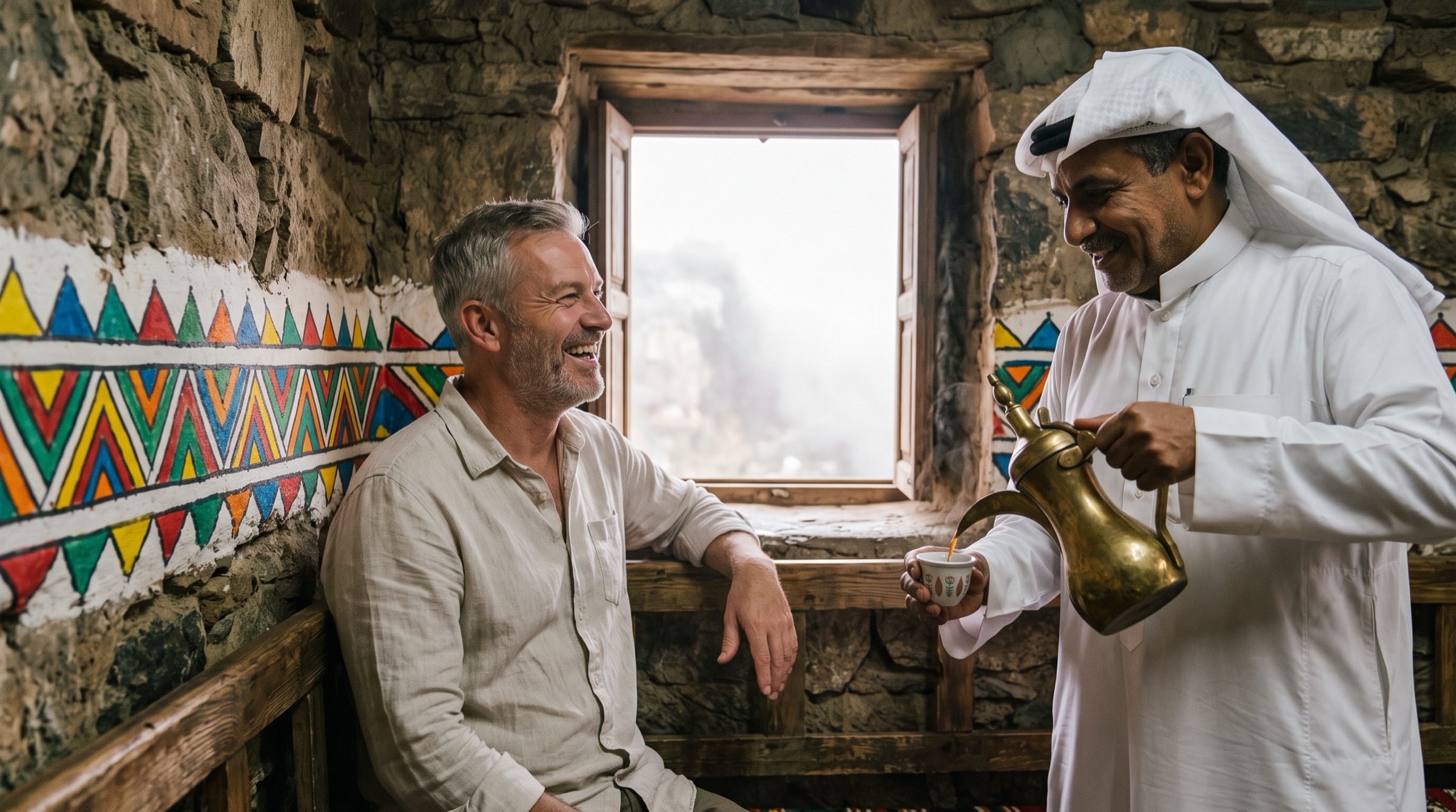
Her grandfather took her to the Old Road Café when she was small. Abu Saeed has made the coffee there for forty years. It is on no guide's list, and few guests have ever found it. Until today.

She points her camera and tells the story.

Thirty seconds. A photo of the door, and a voice note.

“My grandfather used to call this place his second home.”

Voice note, 0:28, in Arabic · Fatima, signed in with Nafath

Three strangers verify her discovery.

On site
Three people check that it is open, and that the photo matches the door.
With the owner
Confirmed with Abu Saeed, who corrects the opening hours.
Live
The café goes on the map. First discoverer: Fatima, for good.
Paid
SAR 50 to her account (proposed amount).
Fatima with her phone in the old market street
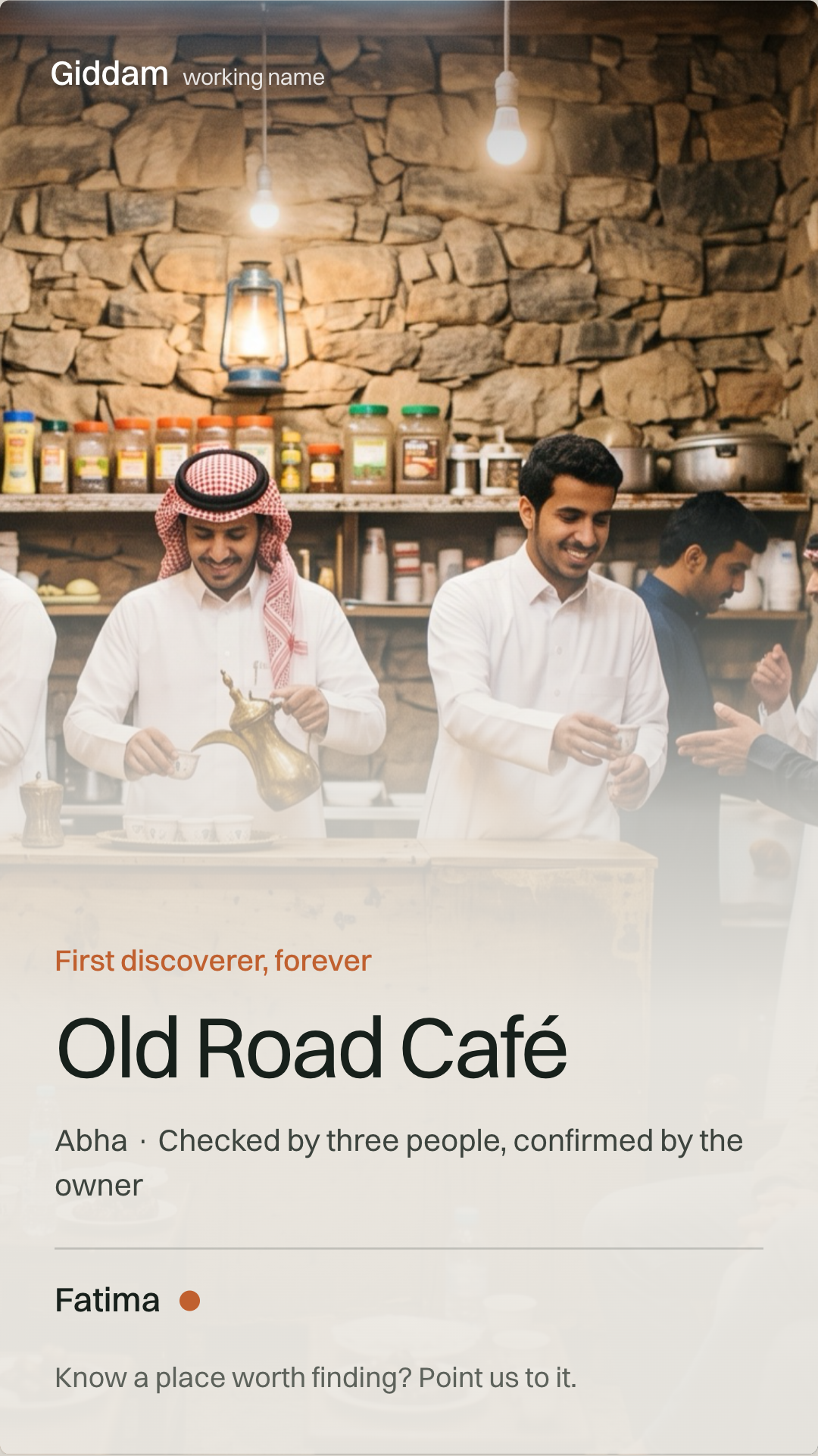
Fatima's first-discoverer card: the Old Road Café, Abha, checked by three people and confirmed by the owner
Her name goes on it, for good

She shares it where her friends already are.

A card for her story on the apps her friends use: the place, who checked it, and her name as its first discoverer. There is no money on it. The credit is the status.

James at a viewpoint above Abha at sunrise
Meet James. London. First time in Saudi.

He wants the real experience.

James asks Sadeem, in English

“Show me something real. Not the usual places. Where do locals actually go?”

There's a café on the corner of the Tuesday market street in Abha. Fatima, who grew up here, shared her grandfather's story about it. Take the bench by the window, and ask Abu Saeed for his coffee with a little extra cardamom.

First shared by Fatima. Confirmed with the owner, checked 21 September. Tell him Sadeem sent you.

520 mto the caféTap to feel each pulse, and walk on
James walking up the old market street in Abha
The pulse

Sadeem doesn't hand him a map.

His phone pulses in his pocket, softly at first. He looks up at the street, not down at a screen.

Under 200 metres, it quickens.

Under 50, it is almost a heartbeat.

The doorway of the Old Road Café

Then it stops.

He has found what a local wanted him to find. Not a map to read. A hunt, with a person at the end of it.

James and Abu Saeed at the Old Road Café

Abu Saeed looks up. “Welcome. You found us.”

He tells James about Fatima's grandfather. James leaves a note for whoever sent him: “Flew from London. Best coffee of my life.”

The welcome word
Sadeem 47
James
Shows the word on his phone. He does not have to say a thing.
Abu Saeed
Taps once on WhatsApp: welcomed.
Counted
One verified visit, sent by Sadeem, first shared by Fatima
At the door

He hears the story from the person who found it.

«جدّي كان يسمّي هالمكان بيته الثاني.»

“My grandfather used to call this place his second home.”

Voice note, 0:28 · Fatima, who shared the café
The Old Road Café, busy, six months later
Six months later

Abu Saeed's grandson runs the café now. He has hired three more staff to handle the rush.

Every time a guest finds the café because of her, Fatima earns SAR 1 (proposed). James's note reached her too.

Fatima and James never met.

Her knowledge shaped his journey. His experience enriched her discovery.

Three more lives. One Kingdom.

Rijal Almaa
Noura. The Keeper. Asir.

“My grandmother's stories were disappearing.”

She grew up on stories of Rijal Almaa and the hidden waterfalls. When she searched for them, the digital world was empty. Her grandmother's Saudi Arabia was invisible.

Noura recording her grandmother

“If no one else will record this, I will.”

Thirty seconds. A photo. A voice note in her grandmother's own words.

«كانت أمي تنقش جدران بيتنا قبل كل عيد، ولكل لون عندها معنى.»

“My mother painted the walls of our home before every Eid. Every colour meant something to her.”

Voice note, 0:42 · Al-Qatt Al-Asiri · credited by family name, at the family's request
Noura's record
0

places saved by one person.

As her grandmother's places go on the record, the cloud over Asir lifts.

Noura: Heritage Guardian, level 12. Story Keeper. Mountain Explorer.

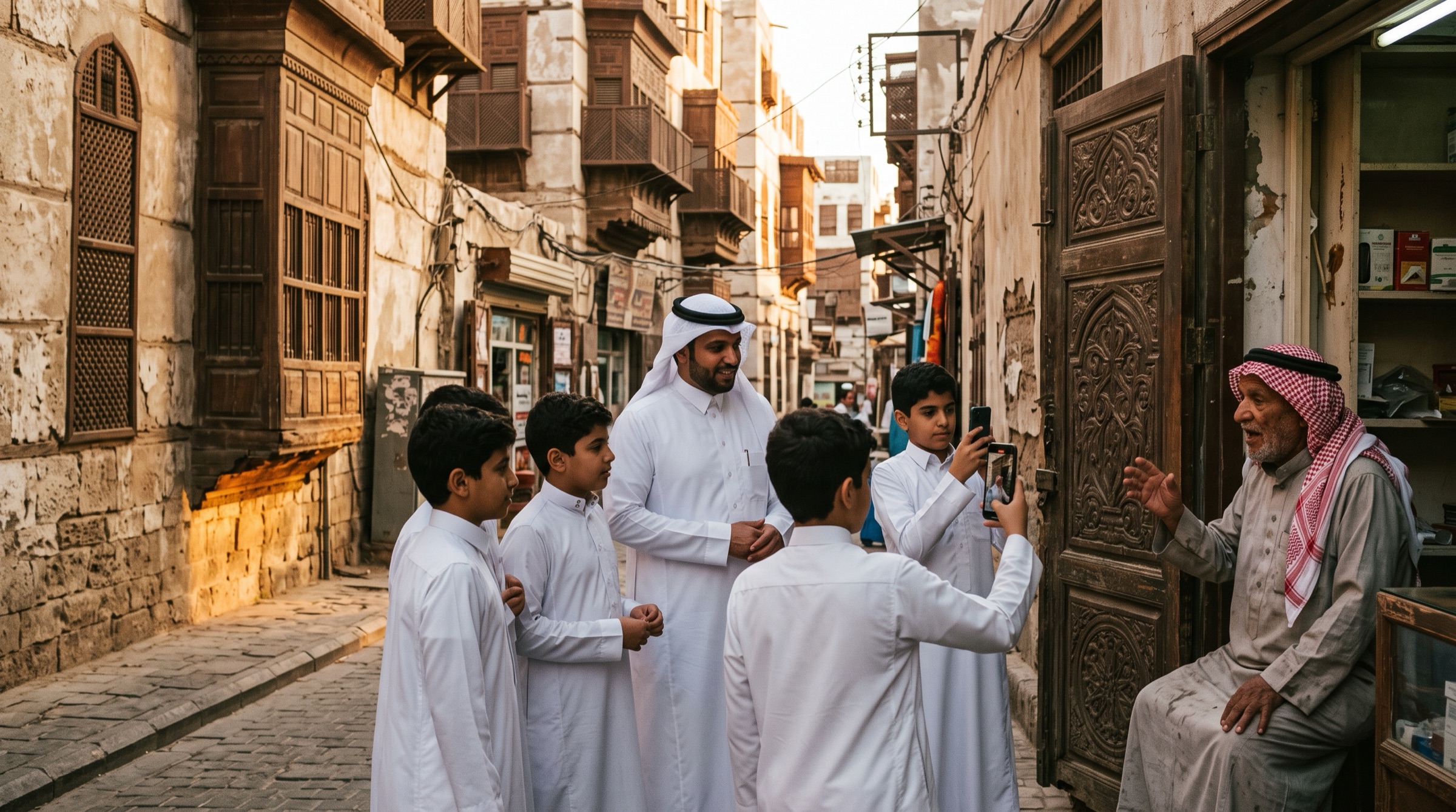
Hani and his students in Jeddah's historic district
Hani. The Teacher. Jeddah.

“I wanted my students to see history, not just read it.”

In class, heritage lived on the page. Few of his students had ever stood in front of it.

History became a competition.

They stopped studying history and started making it.

Class 9B · Al-Balad
0 places
Class 9A · Al-Balad
0 places
Class 8C · Al-Hamra
0 places

Example: a heritage challenge between Jeddah classes, in Jeddah's historic district.

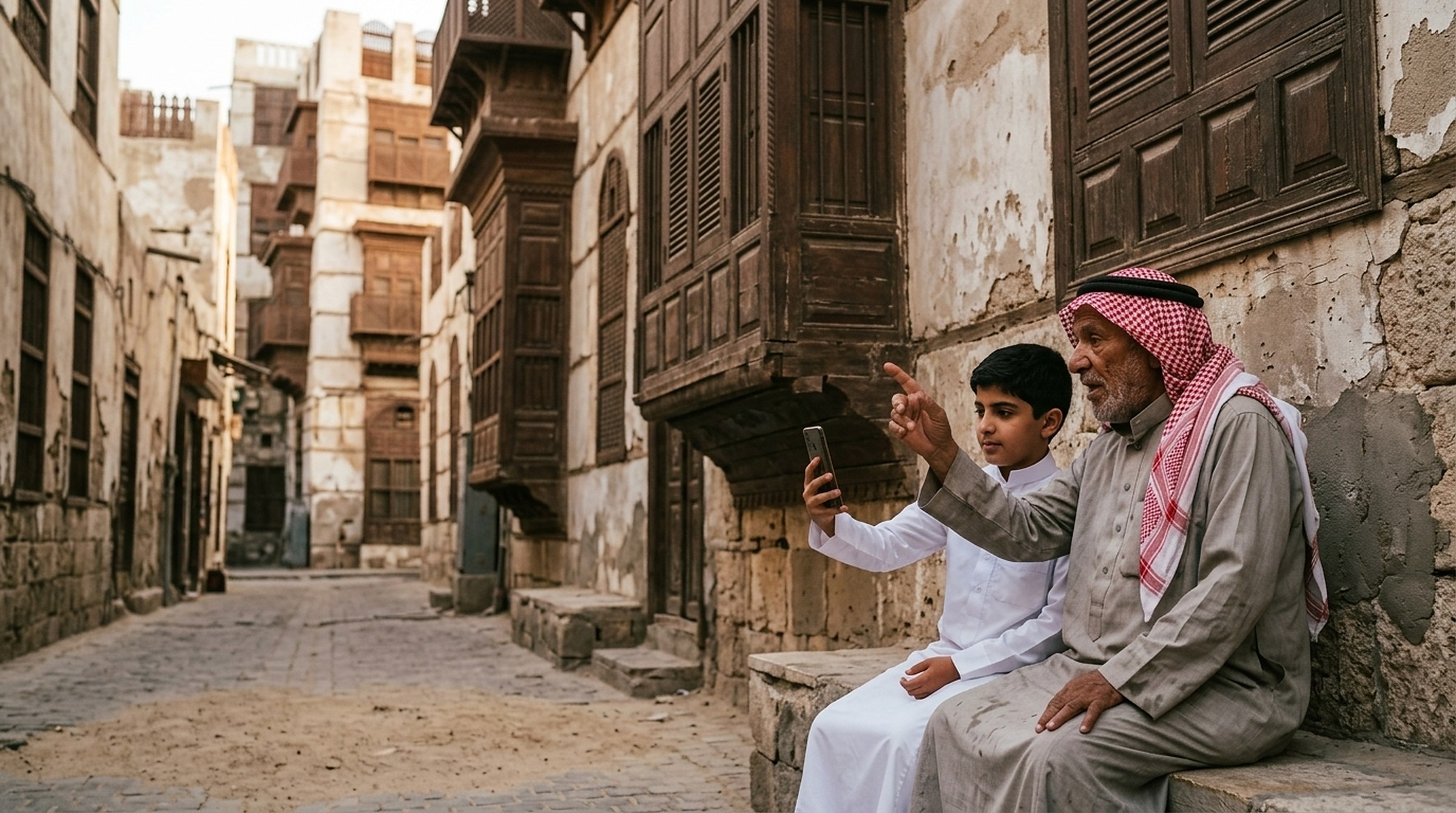
A boy shows his grandfather the record of their neighbourhood in Jeddah's historic district

“My student taught his grandfather about his own neighbourhood.”

Heritage flowing both ways. Past and future, connected.

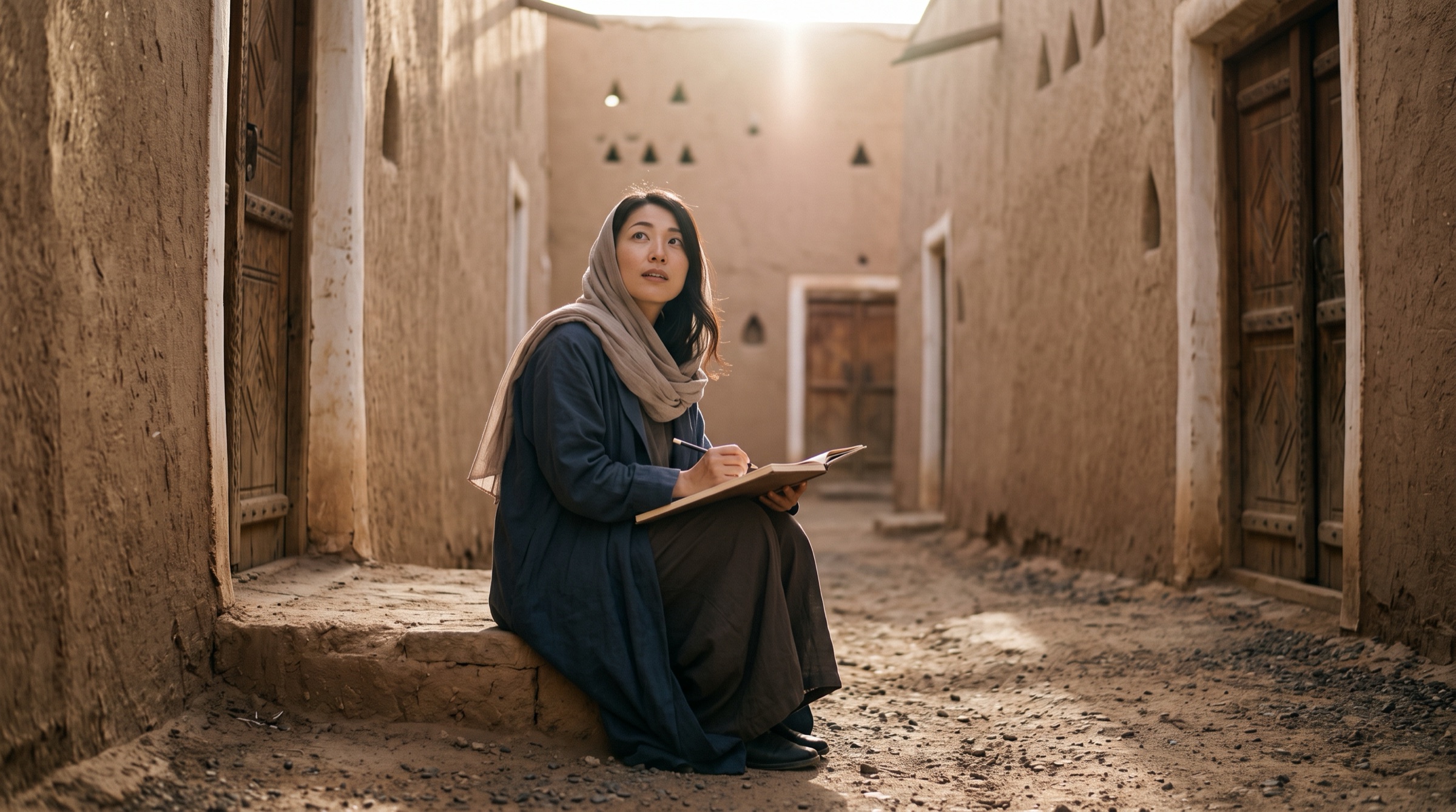
Yuki sketching in an old Najdi lane
Yuki. The Explorer. From Japan.

The search for soul.

An architect, she didn't come for the malls. She came for the culture, and the travel apps only showed her the surface.

Yuki's travel log

Twelve cities. Forty places only locals know.

No mall, no queue. Every stop came from someone who lives there, and every one was checked before she arrived.

Peeling back the layers.

Her guide didn't send her to the mall. It sent her down an alleyway to a building that breathed history.

What she is drawing
A restored mud-brick merchant's house in Najd, open to visitors. Built thick to stay cool through the summer; the triangular openings let the heat out.
Shared by
The heritage house's guide · confirmed in person
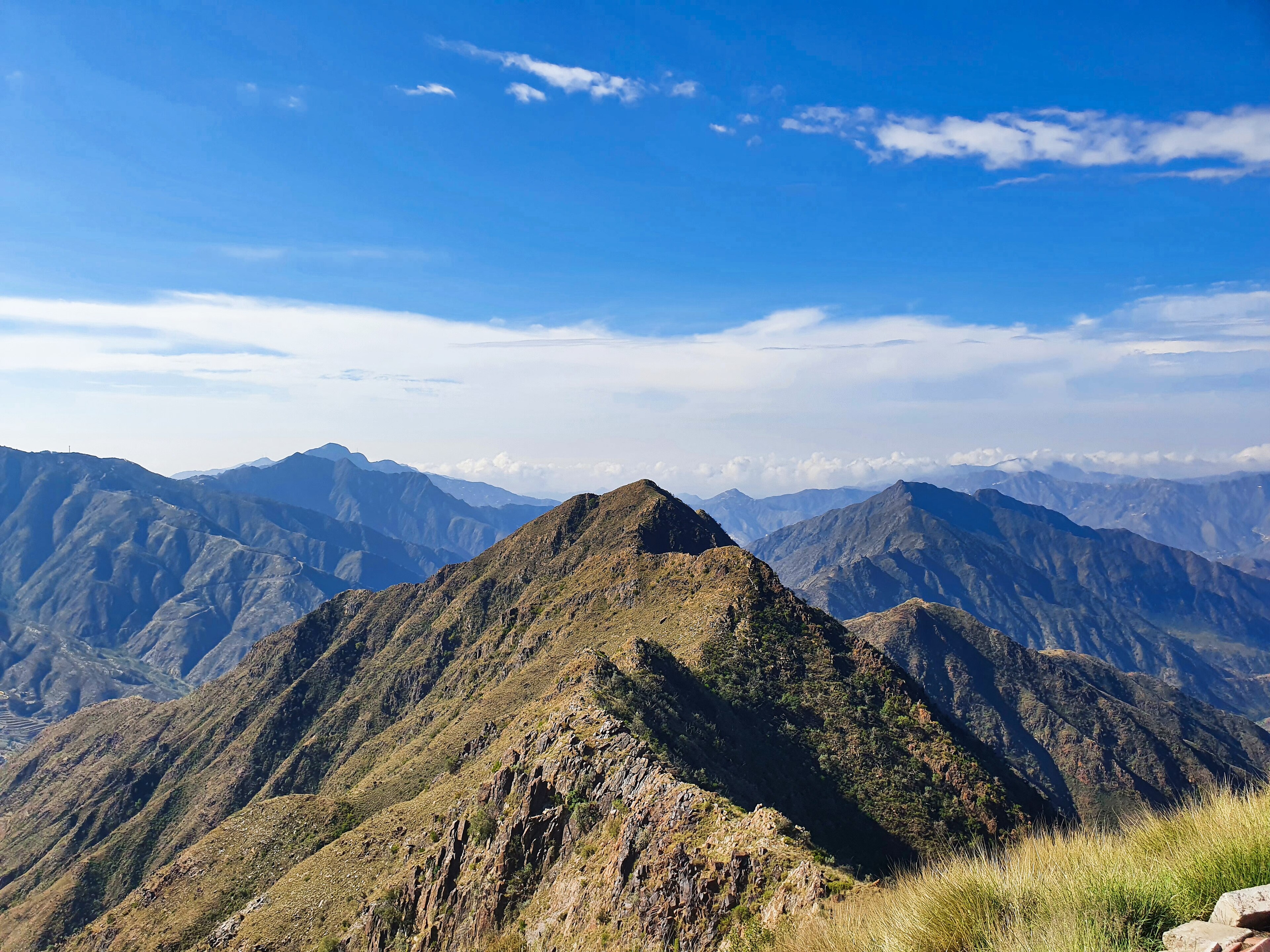
Peaks of the Sarawat mountains, Asir

“I found a country I never knew existed.”

She came as a tourist. She left as an ambassador.

Yuki's travel log: 12 cities, 40 places only locals know. Explorer, level 5.

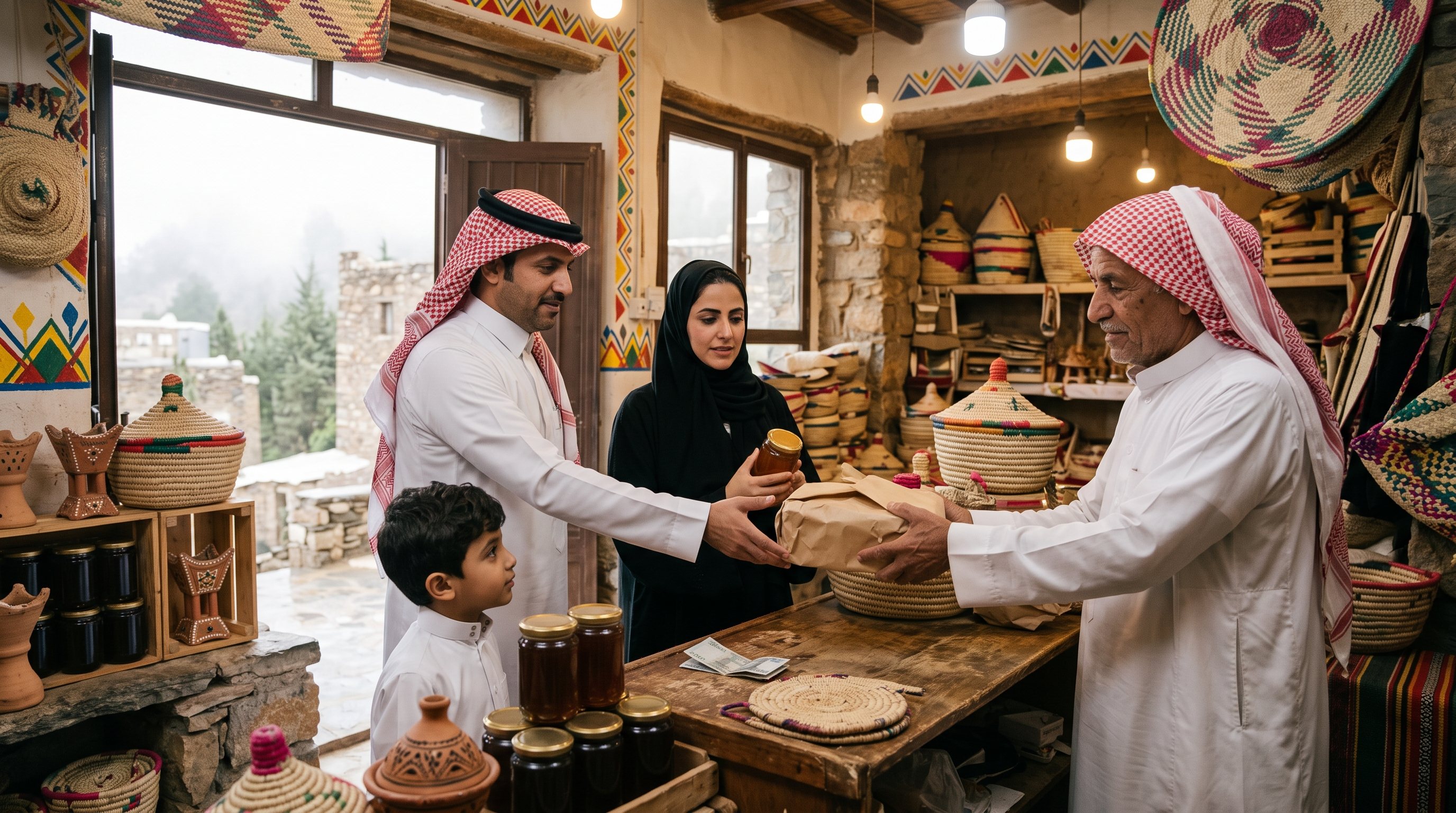
A family buying a basket and honey in a craft shop

The economic multiplier.

What you didn't ask for, but what we deliver: money that reaches local businesses directly, and a count that shows where every visit came from.

The counter of the Old Road Café

Every visit, counted. Without tracking anyone.

Each place offers a small welcome of its own choosing, and the guest claims it one of two ways. Each claim is one verified visit, tied to whoever sent the guest. No plaque, no device, nothing to install.

A guest asks
Wherever they already ask: a visitor site, WhatsApp, a partner app or an AI assistant.
A guide sends them
To a checked place, with the owner's name and the date it was checked.
The welcome word
“Sadeem 47.” The guest says or shows the guide's word for the day, and the owner confirms it with one tap on WhatsApp. It works at every place, however small.
Or the receipt
If the guest prefers, they scan the QR code on the tax receipt. Its signed code proves the place and the time, and nothing more is asked.
Everyone sees it
The Ministry, the region, the owner, and the local who shared it, week by week.
Abu Saeed looking at his own page on a tablet in his café
What Abu Saeed sees

His own page, free.

Welcomes claimed
0 this month
Sent by
Sadeem, then Salem
Guests said they came from
Riyadh, Jeddah, Dammam, London
They asked for
A family table, open after Isha, coffee to take home
Thank-you notes
“Flew from London. Best coffee of my life.”

Example figures. Counting starts when a street is recorded; each owner notes a normal weekend first, so the change is plain.

ReemCultural Curator
FahadAdventure Guide
SadeemLocal Insider
SalemFamily Navigator

Your guide to the Kingdom.

“Show me something I'll never forget.” That's exactly what they do.

Four guides. Four perspectives. One Kingdom. Each answers only from the checked record, names the local who shared it, and says so when it does not know. Choose your guide, or let us match you.

Salem, Family Navigator
Families

Salem.

Anticipates what a family needs before they ask. Practical, patient, always has a plan B.

“Travelling with kids aged 4 and 7. They're already tired and cranky. Help.”

You're near the Jeddah waterfront. There's a playground at the north end that's shaded until 5pm, and the ice cream cart beside it does fresh mango. Maghrib is in 45 minutes; the mosque by the park has a family section.

Shared by Faisal, a local explorer. Checked 20 September. Tell them Salem sent you.

Sadeem, Local Insider
Where locals go

Sadeem.

Speaks like a friend sharing secrets, and always credits the locals who shared with her.

“Where do locals actually go for coffee in Abha? Not tourist places.”

I'm going to tell you about a place most visitors walk past. The Old Road Café, on the corner of the Tuesday market street. Abu Saeed has made the coffee there for forty years. Take the bench by the window, and order it with a little extra cardamom.

First shared by Fatima. Confirmed with the owner, checked 21 September. Tell him Sadeem sent you.

Reem, Cultural Curator
Culture

Reem.

Speaks with poetic warmth. She knows Saudi poetry, and connects art to life.

“I want to understand Saudi art, not just see it. Where should I go?”

There's a small gallery in Jeddah's Al-Balad. Don't just walk in: go at four, when the light through the roshan screens transforms the room. Then walk three doors down to the calligrapher's workshop and watch him work.

Gallery and workshop confirmed with the owners. Checked 19 September. Tell them Reem sent you.

Fahad, Adventure Guide
Adventure

Fahad.

Brings energy and practical know-how. He'll push you, but he always has your back.

“I want a desert experience that's actually challenging. Not a tourist camel ride.”

I'm sending you to the Edge of the World, but not the crowded viewpoint. Go with a licensed local guide and a proper four-by-four, and leave before sunrise. Walk the rim as the light comes up. Four litres of water each. I'm serious about that.

Route walked with a licensed guide. Safety notes checked 18 September. Tell them Fahad sent you.

See what you've never seen before.

While Yuki sees a trip and Fatima sees her grandfather's café, the Ministry sees the whole Kingdom: every question, every visit and every gap, week by week.

See the gaps

How much of each region's heritage is documented.

The cloud thins as a region's record grows.

Example data.

Know what they want. Now.

Trending questions, last seven days.

Up 0%
“hidden beaches Red Sea”
Up 0%
“AlUla sunset spots”
Up 0%
“traditional food Jeddah”
Up 0%
“ancient ruins near Riyadh”
Up 0%
“hiking trails Asir”
Emerging
“Edge of the World”, up 450% this month

Example data.

From search to visit

Where guests drop off, this month.

Questions asked
0
Sent to a checked place
0
Plans made
0
Welcomes claimed
0

Question to visit: 3.3%, up 0.4 points on last month.

Example data.

See tomorrow. Today.

Asir mountains up 38%, and the Red Sea coast up 67%, before summer.

Recommendation: increase coverage in Asir before the summer peak.

Example data: a guest demand forecast for the next six months.

Invest with confidence

Priority 1: Najran.

Coverage
12% of its known heritage sites documented
Searches
Up 89%
Recommendation
Launch a contributor mission

Priority 2: Northern Borders. Coverage 8%. Recommendation: partner with the regional tourism office.

Example data.

Survey data shows where guests went. This shows what they were looking for, and what they could not find.

Every answer names its source. Every gap becomes next week's mission.

First, measure the gap.

Thirty questions, every claim checked against public sources. Next, a call to every place no public source could confirm, made as the first street is recorded.

Asir, 15 October 2026: 42 of 147 answers confirmed.

Shop owners at their doors on one street in old Abha

Then one street, recorded with its owners.

The cafés, crafts and honey sellers of one street, chosen with the Ministry. Counted for six weekends against a normal weekend, so the change is plain.

Then every region.

Each region owns its record. The guides, the missions and the count work the same way in all thirteen. In time, a way of welcoming guests that other countries learn from.

This isn't a new role for Saudi Arabia. It is the fullest expression of an enduring one.

Diyafa: locals have always told a guest where to go.

A café owner and a contributor shaking hands
How it pays for itself

Three ways to fund it. One rule for all three.

The record stays in the Kingdom, and the people who build it are paid from what their places earn. Nothing a business pays ever decides what a guide recommends.

One

A service the Ministry buys.

Who pays
The Ministry or a region, season by season
For
Recording a street or a region, and running the record and the guides
Contributors
Paid from the season's budget
Best for
The first street: quick to agree, simple to measure
Two

A licence the market pays for.

Who pays
Those who want the visit, for each verified arrival; platforms and AI assistants that use the record; bookings made through a guide
The Ministry
Grants the licence, owns the record, and receives a share of what it earns
Contributors
Paid each time their place earns
Best for
Every region, once the count is proven
Valleys of the Sarawat mountains, Asir
Three

Start with the State. Hand over to the market.

First
The Ministry funds the first street and the first region
Then
Arrivals, bookings and licences grow, and the Ministry's fee steps down as they do
Our proposal
This one. The terms are for us to agree together.
Partners who make it work

Fintechs pay the people. Booking platforms fill the bookable gaps.

Fintechs
Instant payouts to verified contributors; points a guest can spend at small places; welcomes funded when a guest pays by card
Booking platforms
Tours, tickets and stays a guide can book for a guest, while cafés and stalls stay free to find
The line we hold
A commission never moves a place up a guide's answer

A foundation for partnership.

What TAG brings
Local teams
Who record places in person, with every owner's agreement, in Arabic.
The record, the guides and the count
Built for the Kingdom, and handed to the Ministry and its regions.
The thirty-question test
Run before anything is built, so the starting point is measured.
Rewards that reach real people
Paid in riyals to contributors verified through Nafath.
What we ask of the Ministry
An executive sponsor
And a working committee of four to six people.
Access to records
Starting with the National Antiquities Register.
Introductions
To the regional authorities, so each region owns its own record from the start.
A letter of intent
To build it together.
Sunrise over the Asir mountains

The Kingdom's story is waiting. Let's tell it together.

Ask for a private briefingSee the thirty questions